Get truly off the beaten track and live life like the locals with the Timal (non-tourist area) cultural trek
This trek is great for those who want to get off the beaten track and experience amazing Nepalese culture.
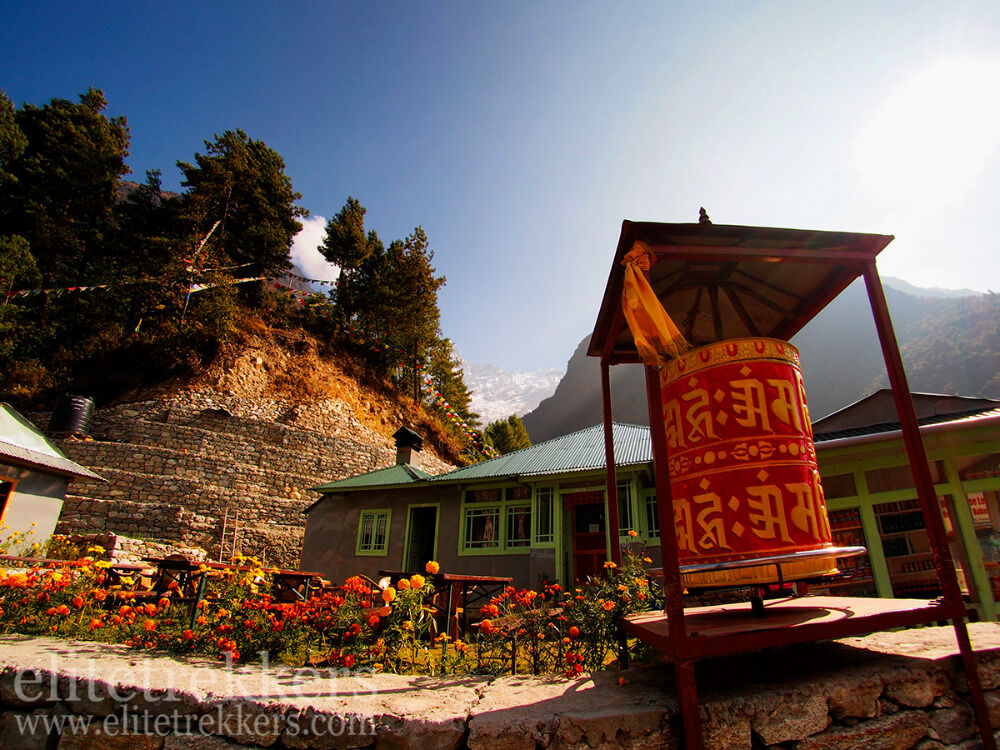
As we visit the sacred pilgrim site at Namobudha you can see the Thrangu Tashi Yangtse Monastery - a beautiful, traditional Tibetan Buddhist Monastery. Along this trek you can visit some truly traditional villages of Kanpur, Naryan and meet the locals at Thulo Parsel. Get to see working rice paddies and rest with the farmers.
Along this trek there are no lodges or teahouses, so instead we stay with local families from the villages in their mud clad homes, which in itself is a truly amazing experience that cannot be beat.
Our local staff are paid a decent living wage, get provided with all the right gear and are always well looked after. We pride ourselves on our ethics.
This is a short trek but a serious overload of culture and is off the beaten track. What more could you want?
Itinerary
Kathmandu to Namo Buddha 1750
From Namobuddha you can take a local or private car for 45km to Kavre Vanjyang. During the drive from Dharikhel you can see Langtang range, new Ganesh range and Gaurishankar range. After Kavre Vanjyang we'll begin our trek, during which you will pass through the beautiful Newari village and some mountain ranges. After a 1.5 hour walk you will get in Namobuddha. This is the one of the most historical places in Nepal. A long time in the past, many immeasurable eons ago, our teacher the perfect Buddha was practicing on the path of learning. Below is the story of how he was overcome with compassion when he saw a tigress tormented by starvation and offered his body to her without a moment’s hesitation. In the distant past, there lived in this world a king named Great Charioteer (Shingta Chenpo) who ruled over a small kingdom of some five thousand subjects. Due to the king’s accumulation of merit, all his subjects enjoyed happiness and well being; rains came at the right time while crops and livestock flourished. The king had three sons: the oldest was named Great Sound (Dra Chenpo), the middle Great Deity (Lha Chenpo), and the youngest Great Being (Semchen Chenpo). Powerful in the martial arts and radiating confidence, the two elder sons always helped the king in governing the kingdom. From his earliest years, the youngest son, Great Being, was very bright and endowed with spontaneous kindness and compassion. He gave freely and generously to others as if to his only child. One day when the weather was fine, the king along with his queen, sons, and ministers left the town for a relaxing time in the country. The king and queen rode upon an elephant while the sons, ministers, and retinue were mounted on beautiful horses. After half a day’s ride, they arrived at a place of thickly wooded forests resonant with birdsong while nearby blossomed a tapestry of flowers in rich variety. The king was pleased with the scenery and ordered a large encampment to be prepared for everyone’s enjoyment. The servants immediately unpacked everything, set up tents, and laid out a hearth of stones for cooking. Soon the ground was covered with tents as clouds billowed in the sky above. The servants bustled about, preparing a variety of foods and offering tea and liquor to everyone. Then the young people began to sing, dance, and play, transforming the encampment into a celestial realm. The king, queen, and ministers watched the entertainment while enjoying an eighteen course meal accompanied by wine and sake. Then the three princes, in the full flush of their youth, picked up their bows and arrows and headed for the forest. As they walked along, they noticed a den in the dense woods. They crept up to it and saw inside a tigress sleeping beside her cubs. Great Sound and Great Deity laid arrows on their bows, making ready to kill the tigress, but Great Being stopped his brothers, saying that killing was completely wrong. When he looked into the cave again, Great Being noticed that the tigress was not able to move, for she had just given birth and she also feared that if she left to hunt for food, another animal might harm her cubs. Tormented by hunger, she lay on the ground unable even to lift her head. Great Being was moved to tears with compassion that arose from the depths of his heart. He asked his brothers, “What kind of food would save the tigress and her cubs?” They responded, “This kind of red Indian tiger eats the warm flesh and blood of a recent kill. So if you want to help her and the cubs, you must find flesh and blood that are fresh.” Great Being thought for a moment: “It’s indeed true that to save the tigress and her cubs, warm flesh and blood are needed. But then I’d have to kill another living being, and that would mean killing one to save another. What else can I do?” He thought for a long while but did not find a solution. Then his brothers said, “We came out here to have a good time. It’s pointless to worry about this tigress and her cubs. It’s time to return to our parents.” And so they left. As he followed his brothers back to the encampment, Great Being thought, “For a long time, I have been cycling in samsara, wasting countless lives, sometimes due to excessive desire, sometimes aversion, and sometimes ignorance. I have rarely met such an opportunity to accumulate merit. What real use is this body if not for the Dharma?” Finally he decided, “This time I must be truly generous.” Before he had gone very far with his brothers, he said to them, “Brothers, you two go on ahead. I have something to take care of and will catch up with you soon.” He took the path to the tigress’s den quickening his pace. When he found the collapsed tigress, she was so exhausted that she could not even open her mouth. Great Living Being reached out his hand to touch her face, but she was so weakened she could not even bare her fangs. So the prince sharpened a splinter from a nearby tree and cut his body to draw blood, which he allowed the tigress to lick. Not long after, she opened her jaws and stood up. With a roar, she pounced on the prince and devoured him. The two brothers waited a long time, but the youngest prince did not come, so they set out to find him. Reflecting on what he had said earlier, they had no doubt that he had returned to the tigress’s den. When they arrived and looked inside, there was nothing left of their brother but blood, bones, nails, and bits of clothing. The tigress had consumed him. At this sight, Great Sound and Great Deity immediately lost consciousness; it was a long time before they recovered their senses. The two gathered up the pieces of their brother’s clothing and, sobbing with deep sadness, set out for their parents’ encampment. During this time, the queen was taking a nap and in a dream saw three doves flying high in the sky. As they fluttered around, a hawk struck and carried off the smallest one. Waking in terror, the queen immediately related her dream to the king. He replied, “Hearing your story, I believe the three doves are our three sons. The youngest of them, carried off by the hawk, is my most beloved son. I’m sure that something dreadful has happened to him.” So saying, the king immediately sent out servants to look everywhere for his son. Soon, the two princes arrived and the king asked, “Did something bad happen to my beloved son? Do you have any news?” Choked with sadness, the two were unable to speak or even breathe for a while. Finally, they sighed deeply and told their parents that the tigress had eaten Great Being. Upon hearing this terrible news, the queen fainted right away. The king too was overwhelmed with immense sadness and tormented by sorrow. After a long while and with profound sighs, the two princes, the king, and the queen rushed to the place where the youngest prince had died. When they arrived at the opening of the den, what met their eyes were the bones and rivulets of blood left behind by the tigress. The queen recoiled, overcome with sobbing, and did not recover for a long while. Meanwhile, the prince had been reborn as Great Courage (Nyingtob Chenpo). He wondered, “What did I do to be reborn here in the celestial realm of Tushita?” Through his divine eye, he thoroughly examined the five realms. Great Courage saw that, gathered around the bone fragments he had left behind, were his parents and two brothers. They were sunk in lamentation and completely miserable. He thought, “My parents are experiencing such unhappiness, it could threaten their very lives. To lighten their spirits, I’ll go talk to them.” He descended from space to the lofty sky and spoke words of encouragement to comfort his parents: “I’m the prince Great Being. After giving my body in generosity to the starving tigress, I was reborn in the celestial realm of Tushita.” With tears in their eyes, the king and queen said, “Son, you who are like our very heart, offering your body to the tigress was certainly most praiseworthy. But whom can we tell of our suffering in missing you?” Great Courage replied, “Please do not be unhappy. The end of birth is disintegration, and the end of gathering is separation. No one can transcend this for it is the nature of things. It is the same for everyone. If you perform evil actions, you will fall into the hell realms; if you perform virtuous actions, you will be reborn in the higher realms. Therefore, diligently pursue virtue. Make aspiration prayers, and in the next life we will definitely meet in a celestial realm.” After a few more words, he disappeared. The king and queen became a little happier and made the commitment to pursue virtuous activity. They created a small casket covered with seven kinds of jewels in which they laid the bones of their son and a stupa was built over the place in which it was buried.Trek to Kanpur 1600
After breakfast walk down to Bhakunde Besi.on the way you will get beautiful village with traditional house and nice paddy fields. lots of birth. Somewhere you can see some farmer ploughing the field. We'll take lunch in Bhakunde Besi then Step up to Kanpur. On the way up you can see beautiful mountain view and real Nepali faces When you get in Kanpur you don't get any lodge you have to stay with local people. They don't have any gas stoves, they cook on the open fire, burning wood. They don't have any luxury foam mattresses either however, just like them, you have to sleep on what ever they have got If you're interested, in the evening they will show you come of their cultural highlightsTrek to Narayan Sthan 1500
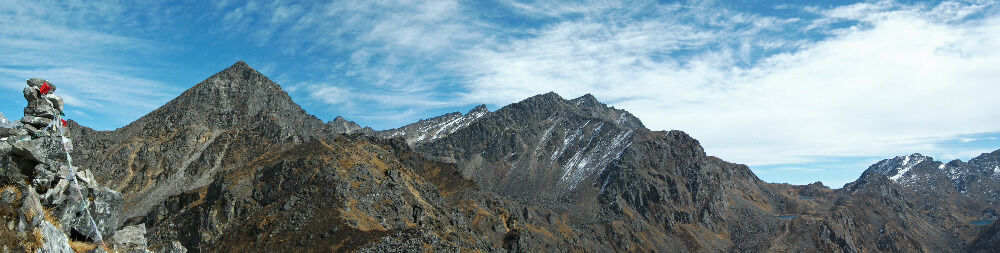
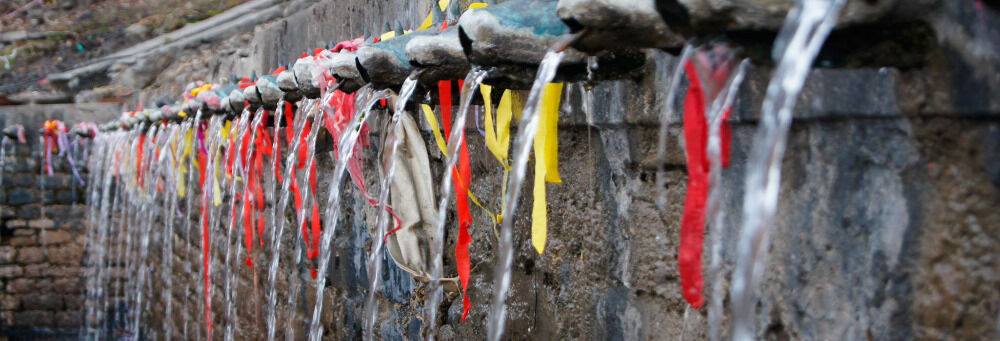
After Kanpur, you will get lots of historical place and religious place.when you walk up for 40 minutes you will get place call Kot Timal .in 1850 ad this place was Tamang community kingdom.during the unified the kingdom was unified. But still you can see some brick and map of palace and water tap which tap has built by king. After that place you will get in another historical place where guru Rinpoche kill the demon. There is one cave call Yari Nag cave if you go there in side the cave you can see some book of guru Rinpoche and some pot. After that place 30 minutes walk you will get in Narayan Sthan.when you get there you can see two big stupa and one Hindu temple.if you go little further down you will get one beautiful statue of guru Rinpoche and monastery. It is a beautiful viewpoint also. From this place you can see Langtang range, new Ganesh range Gaurishankar and some part of mt. Everest. We stay over night here.Trek to Thulo Parsel 1200
After sunset view of mountain we will walk slowly downhill, passing some beautiful villages we will get in Thulo Parsel. You don't get any hotel or restaurant here; you'll sit down on the floor to eat with the locals. After your dinner they will show you some traditional singing and dancing.Return to Kathmandu 1400
If we take local bus it takes 5 hours. If we take jeep or car it takes 3 hours. The road is bumpy and rough for 50km, after that we'll reach a welcomed concrete road. The mode of transport we take will largely depend on what is available on the day we return. We'll be far from the crowded city streets and transportation can be flaky, especially if there's been a spell of recent bad weather!
What's included
- Comfortable guesthouse accommodation on nights 1 and 3
- Accommodation in a real village house on nights 2 & 4
- Breakfast and evening meal during homestays
- High quality sleeping bags provided
- Friendly, local, English speaking guide and hospitable hosts
- Full pre-departure briefing and trip information
What's not included
- International flights / transport
- Nepal visa fees (payable on arrival)
- Trekker's travel insurance
- Personal needs (e.g. laundry, postcards)
- Tips for your Guides & Porters