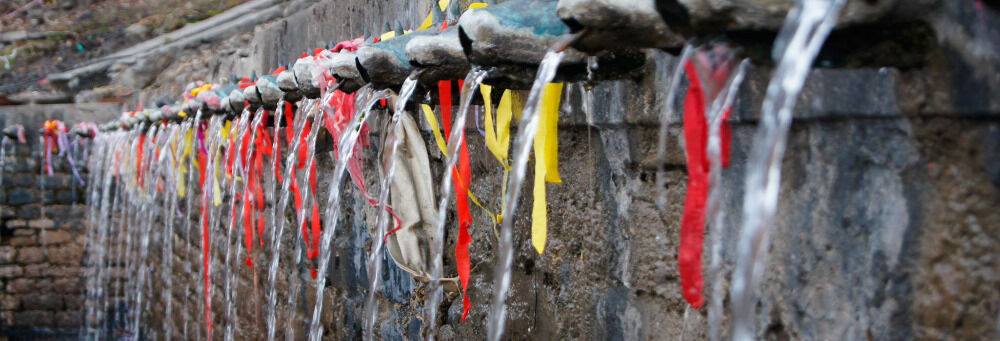
Ten days behind the Himalaya into the walled city of Lo Manthang, through red cliffs and cave country that belongs to Tibet in every way except the border.
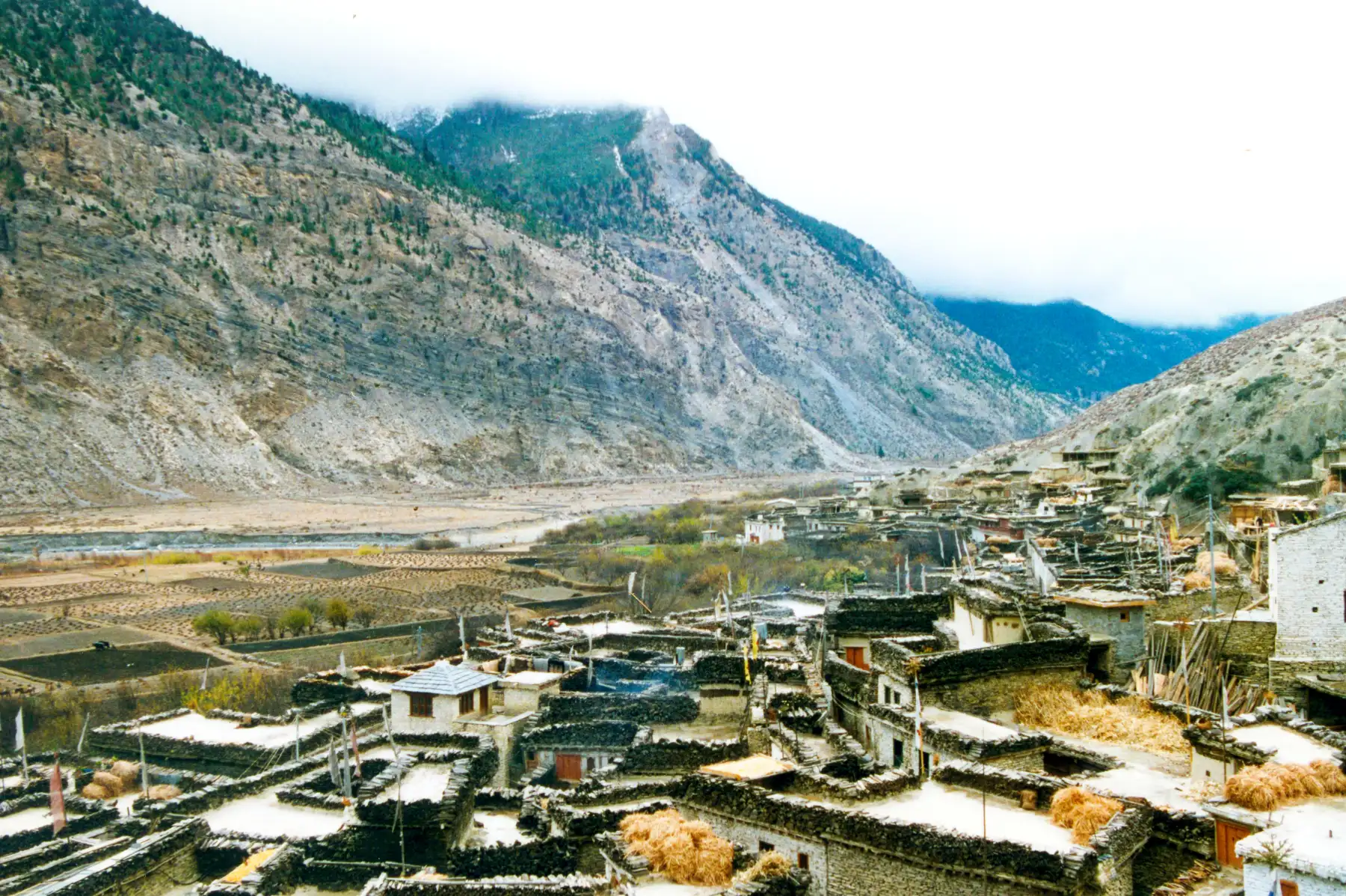
Upper Mustang was a kingdom until 2008 and closed to foreigners until 1992. It sits north of the main Himalayan chain, up the Kali Gandaki past Jomsom, in a landscape that has more in common with the Tibetan plateau than with anywhere else in Nepal: no trees, red and ochre cliffs full of man-made caves, whitewashed villages, and a walled capital at Lo Manthang that has been there since 1380.
The trekking is not the point here, which is worth saying plainly. This is a moderate walk at a moderate altitude through a place most people will never otherwise see. If you are collecting passes and base camps, go elsewhere. If you want the last intact piece of old Tibet, and it happens to be in Nepal, this is it.
Our local staff are paid a decent living wage, get provided with all the right gear and are always well looked after. We pride ourselves on this.
The one trek that works in the monsoon
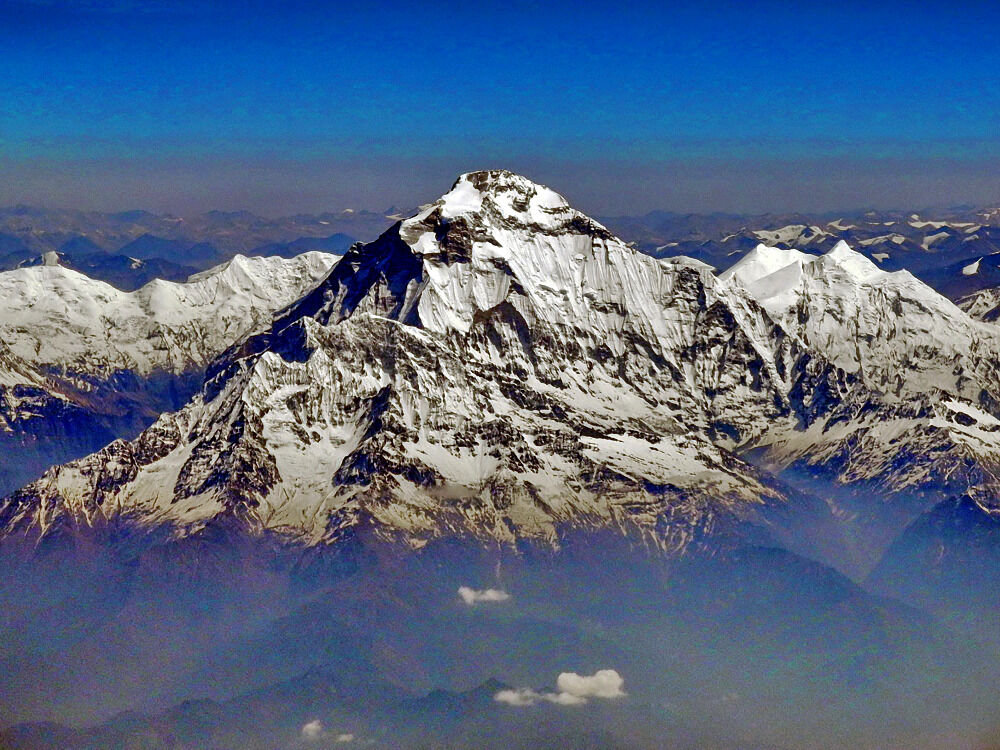
Mustang sits in the rain shadow of Annapurna and Dhaulagiri, which between them take almost everything the monsoon carries north. While the rest of Nepal is under cloud from June to August, Mustang is dry, clear and open. That makes it the answer to a question we get every year from people whose only free weeks are in the summer, and for whom the honest answer everywhere else is "come back in October".
Spring and autumn are still excellent and slightly warmer. What Mustang is not is a winter trek: it is bitterly cold, most of Lo Manthang decamps south for the season, and a good share of the lodges close. More on the seasons in when to trek in Nepal.
The permit, which is the expensive part
Upper Mustang is a restricted area and the permit is priced per day, at present US$50 for each day you are inside the zone, on top of the ordinary Annapurna Conservation Area permit. On a ten day itinerary that is most of the trek, and it is a large enough number that it changes how you should plan: a longer Mustang trek costs meaningfully more per extra day than a longer trek anywhere else in this region.
It is also, as with every restricted area, issued only to a registered agency against a named licensed guide. There is no counter where a trekker can buy one. The current figures are on permits and park passes, and restricted area fees move more often than park fees, so we confirm them with your quote.
About those Jomsom flights
The trek begins and ends with a twenty minute flight between Pokhara and Jomsom, which is a spectacular piece of flying straight up the Kali Gandaki between two 8,000m mountains. It is also weather dependent and cancels regularly. The valley wind gets up mid morning and does not drop, so flights only run early, and a cloudy morning in Pokhara can put the whole day back.
Plan for it rather than hope. Keep a spare day at the Pokhara end before any onward flight, and know that the fallback is a long drive up the valley instead: possible, unlovely, and considerably better than missing your trek. We will tell you on the morning which one it is.
Itinerary
Fly to Jomsom, walk to Kagbeni 2800
An early flight from Pokhara, twenty minutes between Annapurna and Dhaulagiri, landing at Jomsom on the floor of the world's deepest valley. Breakfast, then three or four hours north along the Kali Gandaki to Kagbeni: a medieval looking village of mud brick alleys and a red gompa, sat at the junction where the trail to Mustang turns off. The checkpost at the top of the village is where Upper Mustang starts.Kagbeni to Chele 3050
Permit formalities at the post, then five or six hours into the restricted area proper. The valley walls turn red and start showing caves, hundreds of them, cut into cliffs nobody can now reach. Through Tangbe and Chhuksang, where the river squeezes between rock walls, and up to Chele.Chele to Syangboche 3800
Six or seven hours and the biggest day of the trek, over a series of passes with a long climb to each. Dry, open and windy, with Nilgiri and Tilicho behind you whenever you turn round. The passes on this section touch about 4,000m, which is the highest ground on the whole route.Syangboche to Ghami 3520
Five or six hours over more passes and past chortens painted in the red, white, black and grey of the Sakya order, which tells you where you are as clearly as any signpost. Ghami is a green village in an ochre landscape, irrigated and walled.Ghami to Tsarang 3560
Four or five hours, past the Ghami mani wall, which at around three hundred metres is the longest in Nepal, and across the river into Tsarang. There is a five storey white dzong here and a gompa with a library, both worth the afternoon.Tsarang to Lo Manthang 3840
Four or five hours to the walled city, which appears all at once from the top of the last rise. Lo Manthang is perhaps a hundred and fifty households inside a wall, with the king's palace and three fifteenth century gompas among them. It is not a museum: people live and farm here, and the wall is a wall.Lo Manthang, a full day 3840
The gompas of Jampa, Thubchen and Chodey in the morning, and in the afternoon, conditions allowing, a trip out to the cave complexes and the villages north of the city towards the Tibetan border. This is the day the trek exists for, so we do not compress it.Lo Manthang to Chhuksang 3050
Five to seven hours heading south, walking and driving in whatever mix the road and the group call for. Taking transport on parts of the return is what makes a ten day Mustang trek possible at all, and it is a fair trade: the way out repeats the way in.Chhuksang to Kagbeni and Jomsom 2720
Five to seven hours back down the Kali Gandaki, out through the checkpost at Kagbeni and on to Jomsom. Last look at the red country before the valley closes up again.Fly to Pokhara 822
An early flight back down the gorge, weather permitting, and Mustang is behind you by breakfast.
What's included
- Airport pick up and drop off in Kathmandu
- Hotel in Kathmandu
- Hotel in Pokhara
- All transport the trek needs, including the return Pokhara to Jomsom flights
- Every permit the route needs: the Upper Mustang restricted area permit and the Annapurna Conservation Area permit
- English speaking, skilled & experienced Nepali guide
- Well paid local porters to carry your gear
- Three meals a day and hot drinks
- All accommodation on the trail
- High quality sleeping bags provided for trek
- Proper, quality mountain gear to keep our porters safe and warm
- Insurance of all staff, including porters
- Full pre-departure briefing and trip information
What's not included
- International flights / transport
- Nepal visa fees (payable on arrival)
- Trekker's travel insurance
- Cold and alcoholic drinks
- Chocolate and snacks
- Bottled water
- Personal needs (e.g. laundry, postcards)
- Tips for your Guides & Porters
What it costs
$1,500 a head for the ten days if there are two or more of you, and $1,800 on your own. That is a whole trip price rather than a day rate, and the permit is inside it, which on Mustang matters more than the sentence sounds: the restricted area fee alone runs to several hundred dollars per person and it is payable whether you book a trip or hire a guide and organise the rest yourself. Nothing is collected from you at a checkpost.
The flights between Pokhara and Jomsom are in the price too. If the weather grounds them and we drive instead, that is on us rather than a saving we keep or a surcharge you pay.
Day rates, if you would rather hire the team only, are unchanged and on what a guide or porter costs. Do the arithmetic on the permit before you assume that is the cheaper route here, because it usually is not.
Common questions about the Upper Mustang trek
How hard is the Upper Mustang trek?
Moderate. It tops out at 3,840m at Lo Manthang, with passes just over 4,000m on the way in, so altitude is a mild factor rather than the main event. What tires people is the wind, the dryness and several long days of climbing in and out of side valleys. If you can walk six hours on hills, you can do this.
Can I really trek Mustang in the monsoon?
Yes, and it is one of very few places in Nepal where that is true. It sits behind the main range in the rain shadow and stays largely dry through the summer. The catch is getting there: the flights and roads on the Pokhara side are in the weather even when Mustang is not, so allow slack at both ends.
Why is the permit so expensive?
Because it is a restricted area and the fee is deliberately set to limit numbers, which is a large part of why Upper Mustang still looks the way it does. It is charged per day rather than as a flat fee, so a longer itinerary costs proportionally more than it would elsewhere.
Can I go on to Tibet from Lo Manthang?
No. The border is close and closed, and the trek turns round at Lo Manthang and the villages just north of it. The day trip up towards the frontier is as far as the permit reaches.
Is ten days enough?
It is enough for Lo Manthang and the main trail, which is what most people come for, and it uses transport on the way south to make the days fit. Twelve to fourteen days lets you walk the return on the eastern route through Dhakmar and Ghar Gompa instead of retracing, which is the better trek if you have the time and the permit budget for it. Ask us.
What happens if the Jomsom flight is cancelled?
We drive, which takes most of a day up a rough valley road, or we wait, depending on how much slack your itinerary has. It is common enough that we plan for it rather than treat it as bad luck, and it is the reason we ask you not to book a tight onward connection out of Pokhara.