
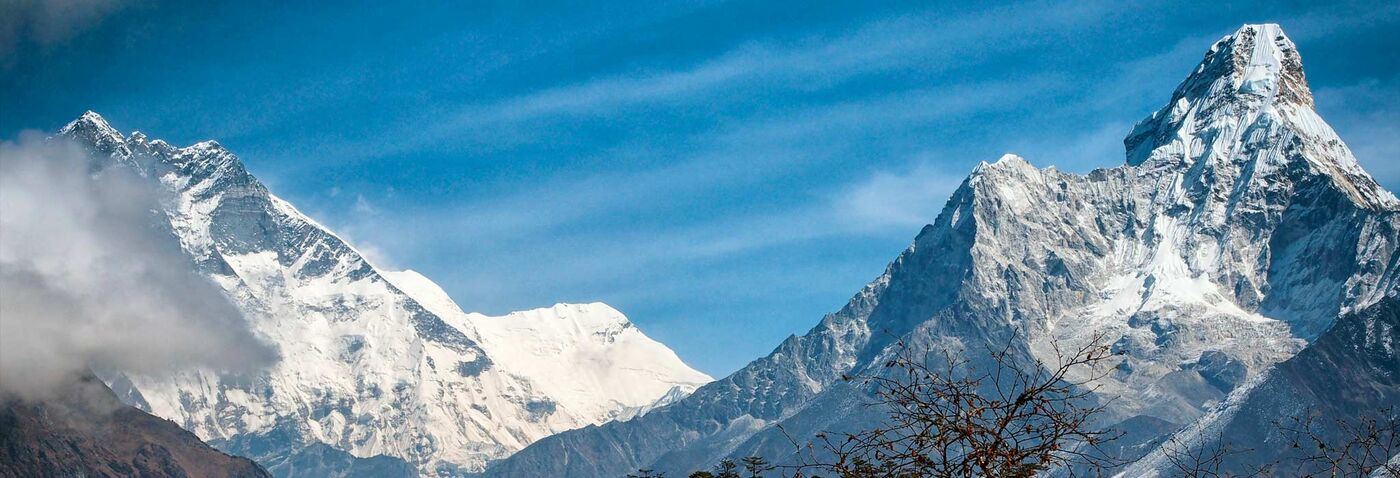
The mountain everyone photographs from the Everest trail, climbed properly, with rotations, weather days and a technical summit ridge.
Ama Dablam is not a trekking peak. It is one of the most beautiful and most technically demanding mountains in Nepal, and this is a full expedition.
The trip combines the classic Everest Base Camp trek with an attempt on a mountain famous for its pyramid summit and its long, exposed ridges. You walk in through the heart of the Khumbu, past Namche Bazaar and Tengboche Monastery, on to Everest Base Camp and Kala Patthar, and then turn off the main trail at Pangboche towards Ama Dablam Base Camp.
From base camp the expedition works upwards through the higher camps in acclimatisation rotations, with rest days and weather days in between, before committing to the summit push. The route involves rock, snow and ice climbing on fixed lines at altitude.
Our local staff are paid a decent living wage, get provided with all the right gear and are always well looked after. We pride ourselves on this.
This expedition asks for real mountaineering experience, excellent physical preparation and the ability to use technical climbing equipment safely at altitude. If you are looking for a first Himalayan summit, start with Island Peak or Mera Peak instead.
Highlights
- The summit of Ama Dablam at 6,812 m
- Everest Base Camp at roughly 5,364 m
- Sunrise on Kala Patthar at roughly 5,545 m
- The mountain flight in and out of Lukla
- Namche Bazaar and Tengboche Monastery
- Sagarmatha National Park
- Views of Everest, Lhotse, Nuptse and Ama Dablam itself
- Ama Dablam Base Camp and the higher camps
- Technical rock, snow and ice climbing on fixed lines
- Acclimatisation rotations through Camps I, II and III
- An experienced expedition climbing team
- A summit attempt with proper contingency time around it
Itinerary
Arrive in Kathmandu 1400
Arrival at Tribhuvan International Airport and transfer to your hotel. Meet your expedition team and talk through the journey ahead.
Expedition preparation in Kathmandu 1400
Final preparation and equipment check. Your climbing team will review the expedition plan, the permits and the equipment before departure for the Khumbu.
Fly to Lukla, trek to Phakding 2610
Morning flight from Kathmandu to Lukla. After meeting the trekking team, begin walking towards Phakding.
Phakding to Namche Bazaar 3440
Follow the Dudh Koshi River and cross several suspension bridges before the climb up to Namche Bazaar.
Acclimatisation day at Namche 3440
A day spent acclimatising. Take a gradual hike to a higher elevation before returning to Namche for the night.
Namche Bazaar to Tengboche 3860
Continue along the scenic trail towards Tengboche with spectacular views of Everest, Lhotse, Nuptse and Ama Dablam, and visit Tengboche Monastery.
Tengboche to Dingboche 4410
Continue through the alpine landscape towards Dingboche.
Acclimatisation day at Dingboche 4410
Rest and acclimatise at Dingboche. A short hike to a higher elevation is recommended before returning to the lodge.
Dingboche to Lobuche 4940
Continue towards the Khumbu Glacier, passing the memorial area, before reaching Lobuche.
Everest Base Camp, night at Gorak Shep 5164
Continue to Gorak Shep and then out along the moraine to Everest Base Camp. Take in the Khumbu Glacier and the surrounding mountains before returning to Gorak Shep.
Kala Patthar, descend to Pangboche 5545
An early morning climb of Kala Patthar for the view of Everest and the peaks around it. After descending, continue down the valley to Pangboche.
Pangboche to Ama Dablam Base Camp 4600
Leave the main Everest trekking route and enter the Ama Dablam climbing area. Trek to base camp, where the expedition team establishes the climbing camp and begins preparations.
Acclimatisation and climbing training 4600
Rest and acclimatise at base camp. The expedition climbing team will run equipment checks and climbing preparation according to the current route and conditions, which may include rock, snow, ice, fixed ropes and expedition equipment.
First rotation, Base Camp to Camp I and back
Begin the first acclimatisation rotation towards Camp I. Climb higher, spend time at elevation as planned by the expedition leader, then return to base camp.
Rest and acclimatisation at Base Camp
Rest and recover at base camp while preparing for the next acclimatisation rotation.
Base Camp to Camp I, on to Camp II
Climb from base camp to Camp I and continue towards Camp II, according to the expedition plan and the conditions on the route.
Camp II to Camp III, return to Base Camp
Continue the acclimatisation rotation towards the higher camps as conditions allow, before descending all the way back to base camp.
Rest day at Base Camp
Rest, recover and prepare for the summit period. The expedition leader will assess the weather forecasts, the state of the route and the team's acclimatisation before deciding the summit strategy.
Contingency and weather day
A flexible day for weather, route conditions, acclimatisation or anything else the expedition needs.
Summit rotation, Base Camp to Camp I
Begin the summit rotation and climb to Camp I.
Camp I to Camp II
Continue to Camp II. The upper section becomes increasingly technical and calls for the right climbing equipment and experienced expedition support.
Camp II to Camp III
Continue to Camp III according to the conditions on the route and the expedition leader's plan.
Ama Dablam summit day 6812
The summit attempt starts very early in the morning. The summit involves technical climbing and exposure, and the exact route and techniques depend on the conditions of the season.
After reaching the summit at 6,812 m, descend carefully towards a lower camp.
Descend to Ama Dablam Base Camp 4600
Continue down from the higher camps to base camp. Rest and recover after the summit attempt.
Base Camp to Namche Bazaar 3440
Descend through the Khumbu Valley towards Namche Bazaar.
Namche Bazaar to Lukla 2840
The final trekking day. Descend through the Dudh Koshi Valley to Lukla.
Fly back to Kathmandu 1400
Morning flight from Lukla to Kathmandu, subject to weather and flight conditions.
Contingency day in Kathmandu
A spare day held back in case of flight delays, weather problems or unexpected expedition delays.
Free day in Kathmandu
Relax after the expedition or explore the city's cultural sites.
Departure from Nepal
Transfer to Tribhuvan International Airport for your onward international flight.
How hard is it?
Ama Dablam is a technical Himalayan expedition peak and is considerably more demanding than trekking peaks such as Island Peak or Mera Peak.
The climb involves rock, snow and ice climbing, real exposure and fixed-rope climbing at altitude. Climbers need appropriate mountaineering experience, excellent physical preparation and the ability to use technical climbing equipment safely.
The route, the camps and the climbing strategy can all change with the weather, the snow and ice conditions, the state of the fixed lines and the decisions of the expedition leader.
Best time to climb
The main climbing seasons are spring, April and May, and autumn, October and November. Autumn is traditionally the most popular period for Ama Dablam, although spring can also provide excellent climbing.
Our support
Ama Dablam needs a different level of preparation and expedition management from a normal trekking peak. Our team focuses on:
- Proper acclimatisation
- Experienced climbing leadership
- Careful weather and route assessment
- Equipment preparation and checking
- Acclimatisation rotations
- Flexible summit planning
- Appropriate high-altitude support
- Safety-first decision making
We never encourage climbers to take unnecessary risks for the sake of a summit. Conditions, weather, acclimatisation and the safety of the climbing team always come first.
What it costs
US$9,000 per person. Ama Dablam requires the appropriate Nepal government climbing permit and other applicable permits, insurance, equipment and qualified expedition support. Requirements, fees, routes and regulations change, so we confirm what is current before your departure.
What's included
- Airport pick up and drop off in Kathmandu
- Hotel in Kathmandu
- Return Kathmandu to Lukla flights
- All required trekking and climbing permits
- Climbing gear
- Guide and porter
- Climbing guide and Sherpa
- Insurance for your guide and porter
- Three meals a day, hot drinks, accommodation and tents throughout the trek and the expedition
What's not included
- International flights and Nepal visa fees
- Trekker's and climber's travel insurance, which must cover technical climbing at altitude
- Cold drinks and alcohol
- Hot showers
- Tips for your guides and porters