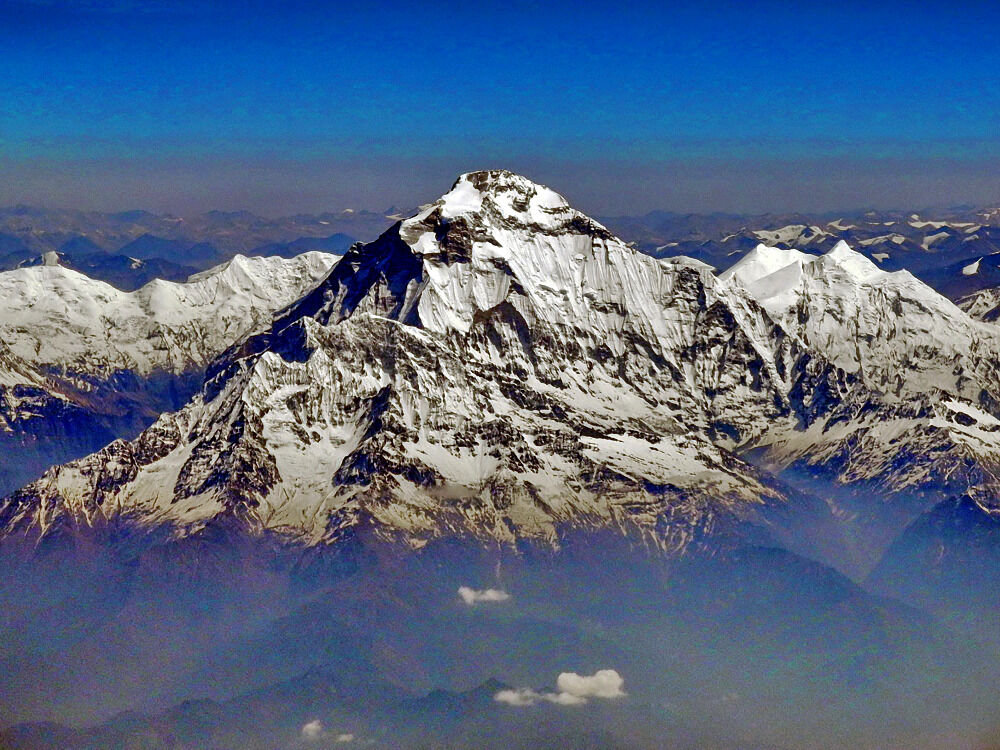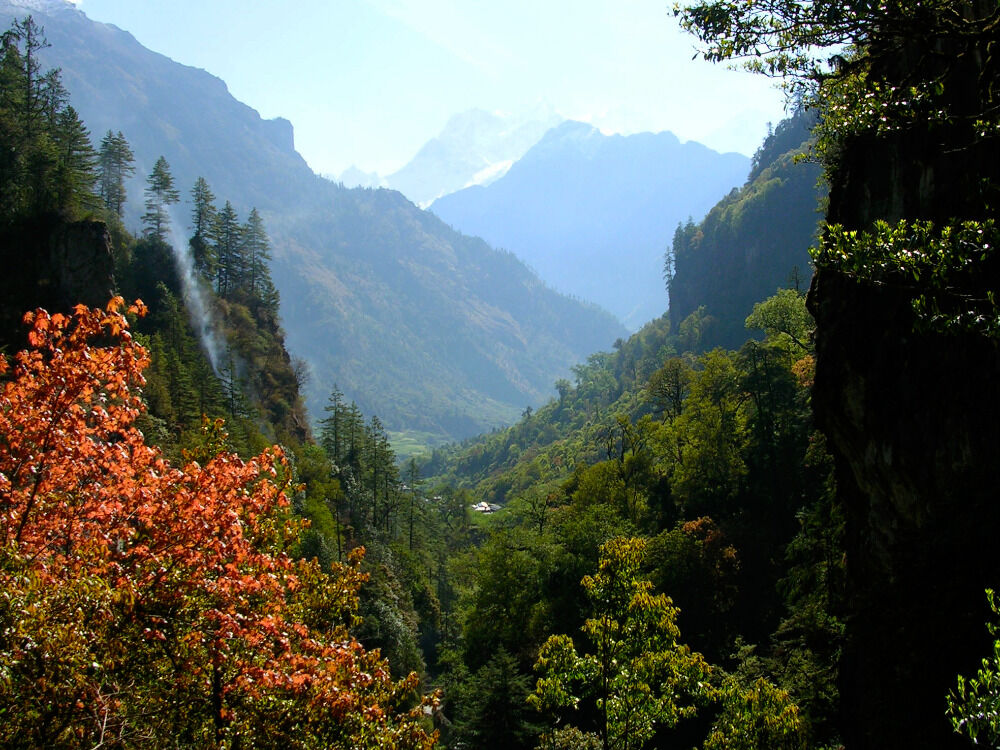
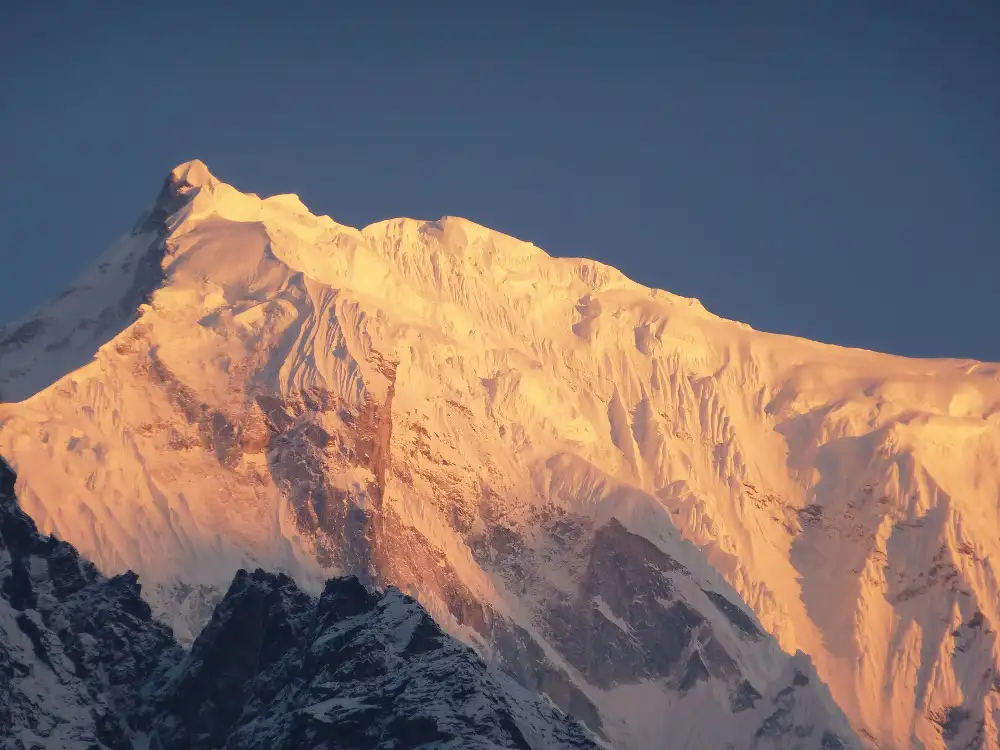
The other side of Annapurna: the 1950 approach to the north face, on a trail with no teahouses, no menu and nobody else on it.
Everybody who says "Annapurna Base Camp" means the south side: the Sanctuary, the amphitheatre, the lodges at 4,130m. This is the other one. It approaches Annapurna I from the Myagdi side to the north west, up from the village of Narchyang and into the head of the Miristi Khola, and it finishes under the north face rather than the south.
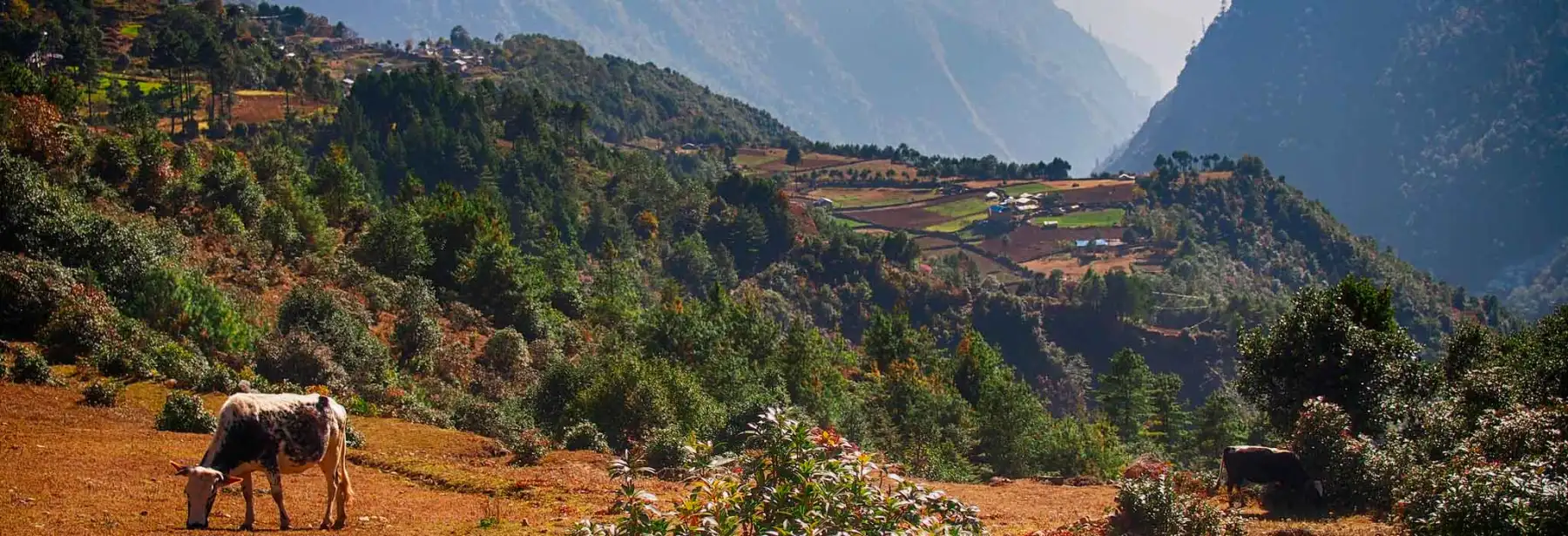
The two are nothing alike. The south side has a teahouse every couple of hours and a few hundred people a day in October. This side has villages for two days and then a handful of simple shelters, no shops, no phone signal and, most days, no other group.
Our local staff are paid a decent living wage, get provided with all the right gear and are always well looked after. We pride ourselves on this.
The Maurice Herzog trail
This approach has a name because of what happened at the end of it. In 1950 a French expedition led by Maurice Herzog came looking for a way up Dhaulagiri, failed to find one, crossed to Annapurna instead and spent weeks working out how to get into the Miristi Khola at all. On 3 June, Herzog and Louis Lachenal stood on the summit of Annapurna I. It was the first 8,000m mountain ever climbed, three years before Everest, and they came down it in a state that cost both of them most of their fingers and toes.
You are walking their line of approach. The trail is better than it was and the maps exist now, but the reason it stays empty is the same reason it took them weeks: there is no easy way in here, and very little has been built to make one.
Where you sleep and what you eat
This has changed in the last few years and most of what is written about this route online has not caught up, so it is worth setting out plainly.
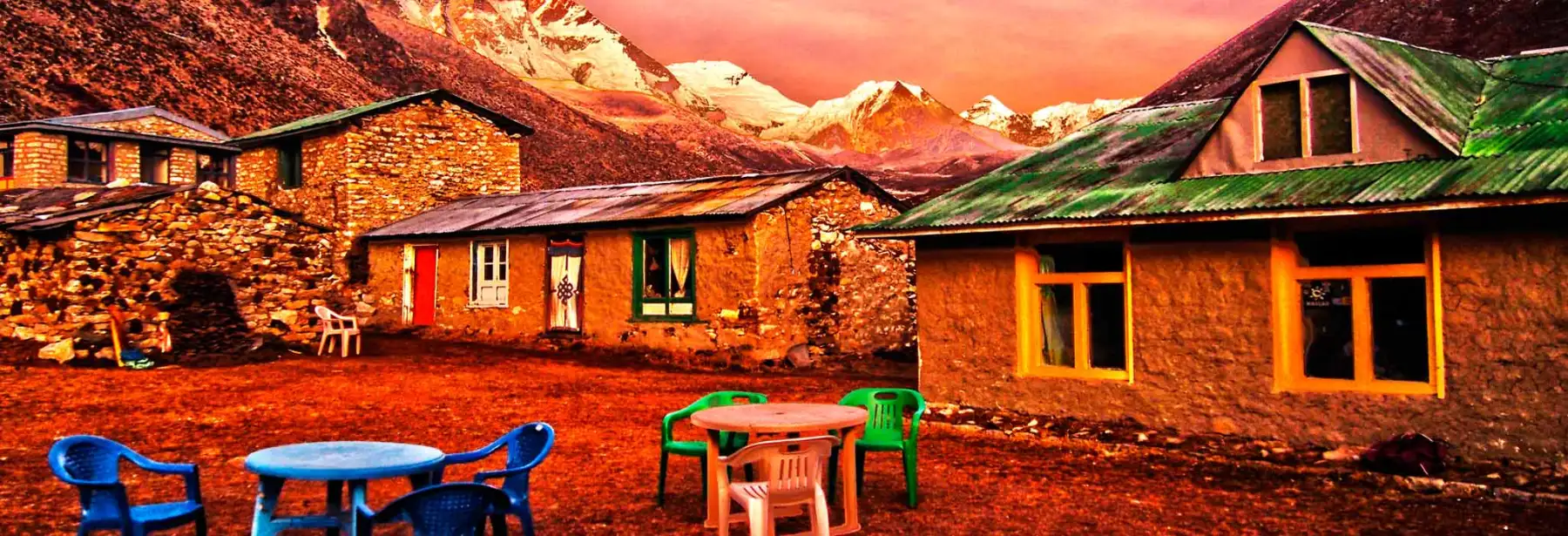
There are now small shelters along the upper trail where you can sleep and eat, so this no longer has to be a full camping expedition the way it did. What they are not is teahouses. Expect one room with everybody in it: there are no private rooms anywhere above the villages, and you will be sleeping alongside your group, your guide, your porters and whoever else is on the trail that night. Nobody is getting a door.
Food is dal bhat. Not dal bhat as the cheapest thing on a menu, but dal bhat as the only thing there is, twice a day, for as long as you are up there. It is good, it is endless by custom, and it is what everyone from the porters upwards is eating. If you need variety or you have a restrictive diet, tell us before you book rather than at Chhotepa.
If you would rather have your own tent, that is still possible and we will arrange it, with our own kitchen alongside it. It costs a good deal more, because a camp and a cook have to be carried in and run for however few of you there are, and the figures are in the table further down rather than hidden behind an enquiry. Either way works on this route now, so it is your call rather than the mountain's.
What you are signing up for
Being straight about this one matters more than usual, because the name looks like a trek that it is not.
- The trail is rough and in places barely a trail. Moraine, loose ground, sections that have moved since the last group came through. This is what upgrades it from moderate to challenging, rather than the altitude.
- You gain height quickly. Narchyang is around 1,100m and Base Camp is 4,190m, reached on the third day of walking. That is fast. The rest day at Base Camp is what makes it work and it is not optional, so please do not ask us to cut the trek to nine days by dropping it. Read altitude sickness first.
- There is no quick way out. From Base Camp it is two days of walking to a road. Weather closes in here and stays closed, and your travel insurance needs to cover helicopter rescue in a remote area above 4,000m.
- Nothing up there is a service you are buying. The shelters are somebody's living, run thin and seasonally, and they can be full, shut or gone. Our guides check ahead where they can, and we carry the option of tents for the nights where the answer comes back wrong.
If what you actually want is the famous view of the Annapurna Sanctuary with a bed and a menu at the end of each day, take Annapurna Base Camp on the south side instead. It is the better trek for most people and we would rather say so here than have you find out at Chhotepa.
Itinerary
Pokhara to Narchyang 1100
Six to eight hours by road, and rougher than the distance suggests. West and north up the Kali Gandaki past Beni, with a stop possible at the Tatopani hot springs, then off the main road to Narchyang in the Myagdi valley. It is a Magar village and the last place on the trek with a shop in it.Narchyang to Chhotepa 2400
Six or seven hours and a hard first day: steep, humid and mostly inside dense forest, gaining well over a kilometre of height. Rhododendron and oak, waterfalls, and the villages thinning out behind you. First night in a shelter.Chhotepa to Sandhikharka 3300
Six or seven hours climbing through the last of the forest into alpine country. The trees give up, the ground opens and the peaks at the head of the valley start to fill the view. Sandhikharka is a high pasture with a shelter on it rather than a settlement.Sandhikharka to North Annapurna Base Camp 4190
Six to eight hours, the longest and best day. High wilderness, moraine and glacial ground, passing Panchakunda Lake, the sacred glacial lake also called Diki Cho, before the last pull to Base Camp. Then the north face of Annapurna I is above you: 8,091m, nearly four vertical kilometres of it, and no lodge, road or other group anywhere in the picture.Base Camp, rest and explore 4190
A full day at 4,190m, which is the acclimatisation this itinerary depends on. Depending on the weather and how the glacier is behaving, your guide will take you further up the moraine or across to the lakes. If anyone in the party is going badly, this is the day it shows and the day we act on it.Base Camp to Sandhikharka 3300
Six or seven hours back down the moraine and out of the high ground. Take the loose sections slowly: most of the turned ankles on a trek like this happen going down, on the day people feel strongest.Sandhikharka to Chhotepa 2400
Five or six hours descending into the forest, the air thickening and warming with every hour. Last night on the upper trail.Chhotepa to Narchyang 1100
Five or six hours down through the trees to the village, and a room of your own for the first time in a week. A last evening with the team who have carried and cooked for you.Narchyang to Pokhara 822
Six to eight hours back down the valley by road, with the Tatopani hot springs on the way and every reason to use them. Evening beside Phewa Lake.Pokhara, or back to Kathmandu 1400
Yours. Your transport back to Kathmandu is arranged and included whenever you want it, or stay put in Pokhara and do nothing at all, which after nine days of this is a defensible plan.
What's included
- Airport pick up and drop off in Kathmandu
- Hotel in Kathmandu
- Hotel in Pokhara
- All transport the trek needs, including Kathmandu to Pokhara and out to the trailhead
- Every permit the route needs, including the Annapurna Conservation Area permit
- English speaking, skilled & experienced Nepali guide
- Well paid local porters to carry your gear
- Three meals a day and hot drinks, which above Narchyang means dal bhat
- All accommodation on the trail: village lodges low down, shared shelters above
- High quality sleeping bags and mats provided
- Proper, quality mountain gear to keep our staff safe and warm
- Insurance of all staff, including porters
- Full pre-departure briefing and trip information
What's not included
- International flights / transport
- Nepal visa fees (payable on arrival)
- Trekker's travel insurance, which must cover remote high altitude rescue
- Cold and alcoholic drinks
- Chocolate and snacks
- Personal needs (e.g. laundry, postcards)
- Tips for your Guides & Porters
Tents and a kitchen crew, if you would rather sleep in your own tent, are priced separately in the table below.
What it costs
Two ways to do this trek, and the gap between them is the largest on any route we run, so here they both are rather than the cheaper one with an asterisk.
| How you sleep | Party size | Per person, 10 days |
|---|---|---|
| Shelters on the upper trail | Any | $1,500 |
| Your own tent and your own kitchen | 1 | $5,000 |
| Your own tent and your own kitchen | 2 | $3,000 |
| Your own tent and your own kitchen | 3 or more | $2,500 |
The shelter price is flat whatever the size of your party, which is unusual for us and is simply what the route costs: up there the bill is the trail, the permits and the team, not the room. It covers everything in the list above, from the airport pickup in Kathmandu to the drop back at it.
The tented option is a genuinely different trip rather than an upgrade to the same one. It means carrying a full camp and a kitchen, and the crew and the food to run both, for a party that might be one person. That is why a solo camping trek costs more than three times the shelter price and why it falls so steeply as people join you: the camp costs much the same to move whether one of you sleeps in it or four do. If you are a pair or a group and you want your own space, it is far better value than it looks at the solo figure.
If you would rather hire the team and organise the rest yourself, our published day rates are on what a guide or porter costs.
Common questions about the North Annapurna Base Camp trek
How is this different from Annapurna Base Camp?
Different side of the mountain, different valley and a different kind of trip. The usual Annapurna Base Camp trek goes up the Modi Khola on the south side to 4,130m, sleeps in teahouses with menus and is busy. This goes up the Miristi Khola on the north west side to 4,190m, sleeps in shared shelters, eats dal bhat and is empty. They share a mountain and almost nothing else.
Do I have to camp?
Not any more. There are small shelters on the upper trail now where you sleep and eat, which is a recent enough change that a lot of what is written about this route still says tents are compulsory. They are not, though we will happily arrange them if you would rather have your own space.
Will I get my own room?
No. Above the villages there are no private rooms at all: it is one shared space, and your group, your guide and your porters are in it together. That is the single thing people most need to know before they book this trek.
What is the food like?
Dal bhat, twice a day, and nothing else. It is properly good and there is always more of it, but there is no menu and no alternative up there. If you have a restrictive diet, talk to us well before you book.
Is 4,190m high enough to worry about?
High enough to take seriously, particularly at this rate of ascent. You go from about 1,100m to 4,190m in three walking days, which is quicker than we would plan if the valley gave us more options. The rest day at Base Camp is the answer to it and it is why the trek is ten days rather than nine.
What is Panchakunda Lake?
A sacred glacial lake below Base Camp, also called Diki Cho, that sits in the moraine on the way up on day four. It is a pilgrimage site as well as a landmark, so treat it as one.
Why does the itinerary start in Pokhara rather than Kathmandu?
Because the road head is west of Pokhara, and counting the drive out from Kathmandu would add two days to a ten day trek for no walking. The Kathmandu end is still ours: the airport pick up, the hotel there, the transport across to Pokhara and the drop back at departures are all inside the price. The ten days are the trek itself.
When can it be walked?
Spring and autumn. Autumn for the clear views, spring for the rhododendron on the way up through the forest. The monsoon puts landslides on the access road and leeches in the forest, and winter closes the upper valley with snow. The shelters are seasonal too, which is another reason not to try the shoulders of the season here. See when to trek in Nepal.