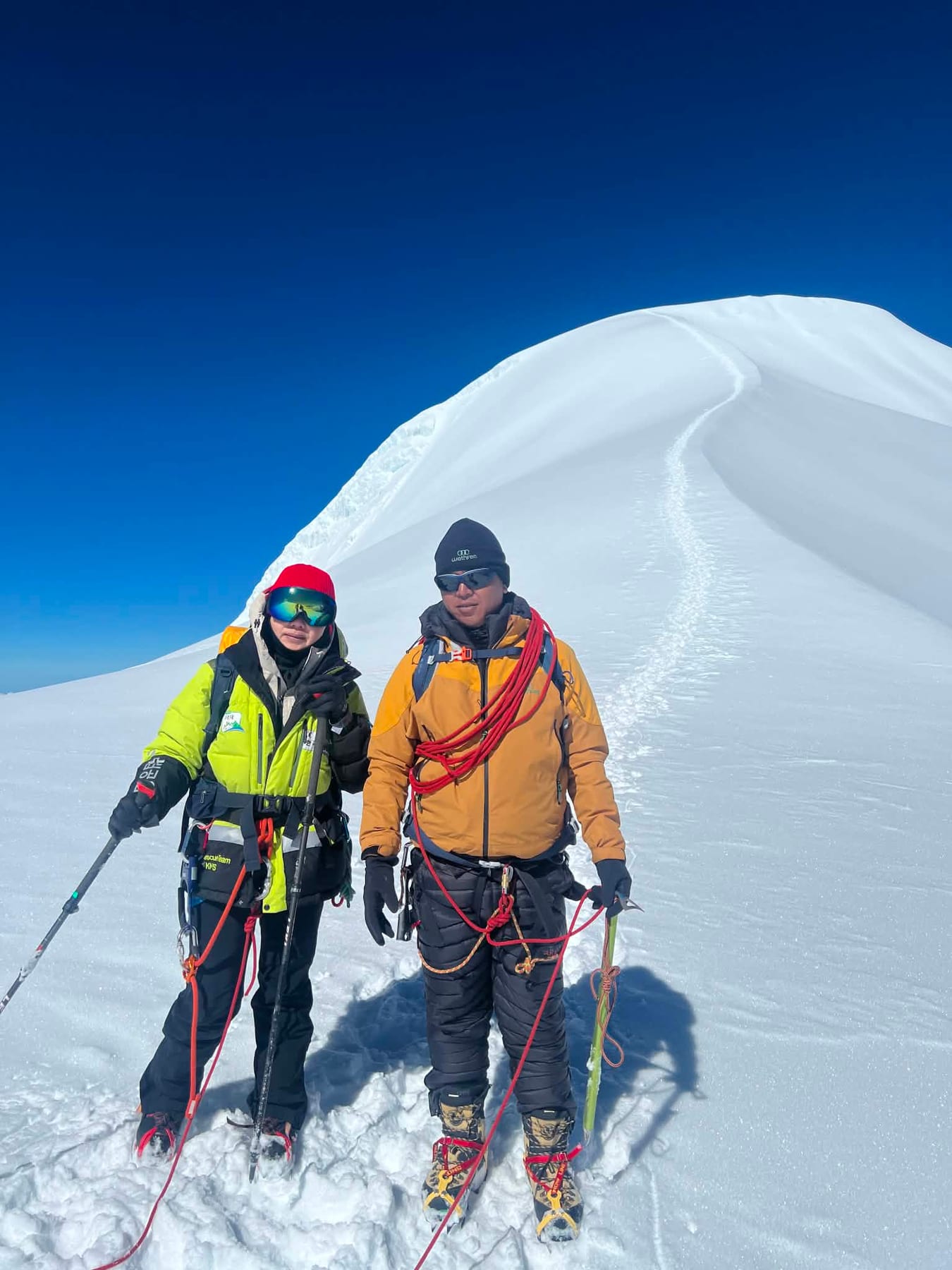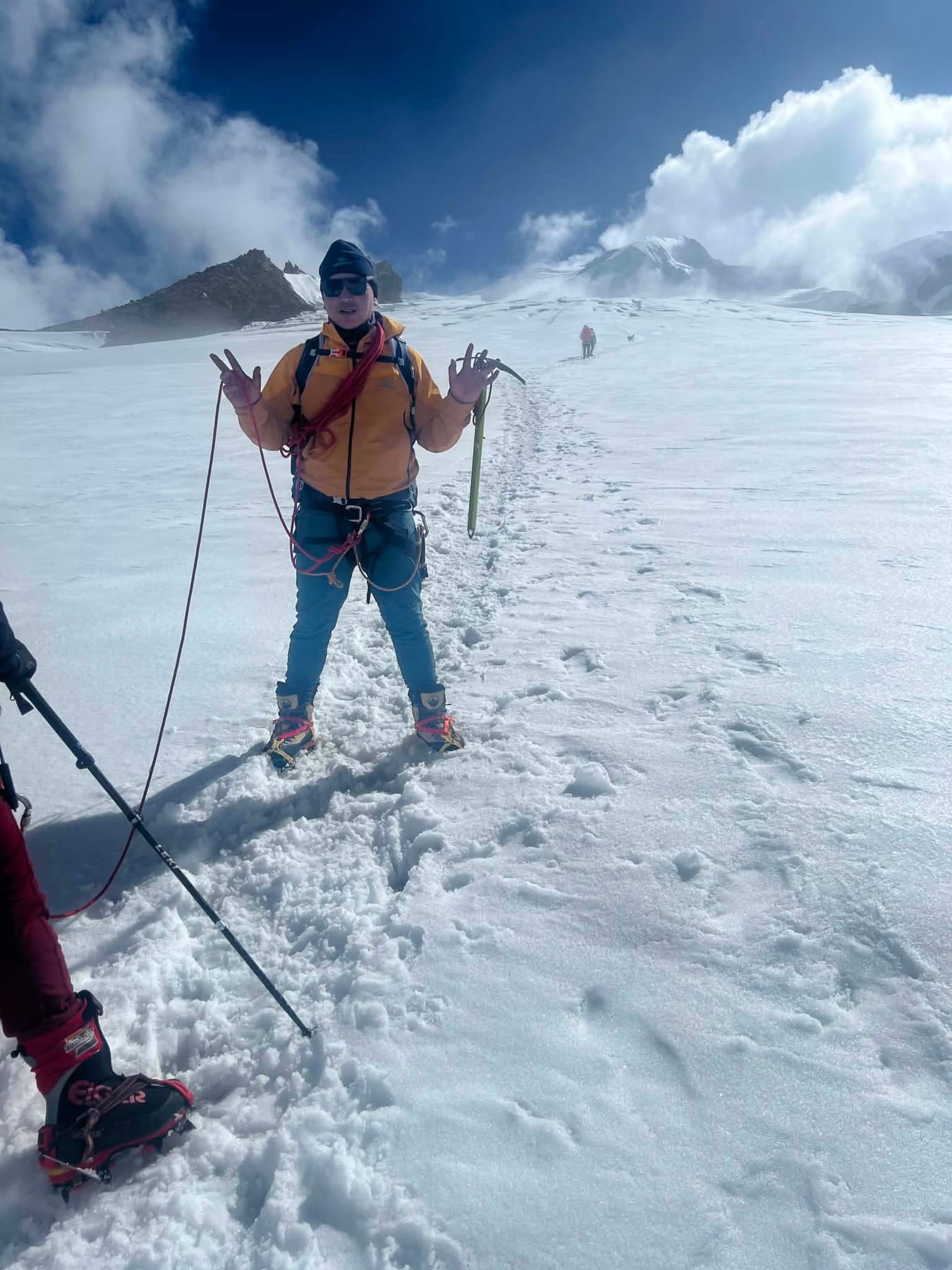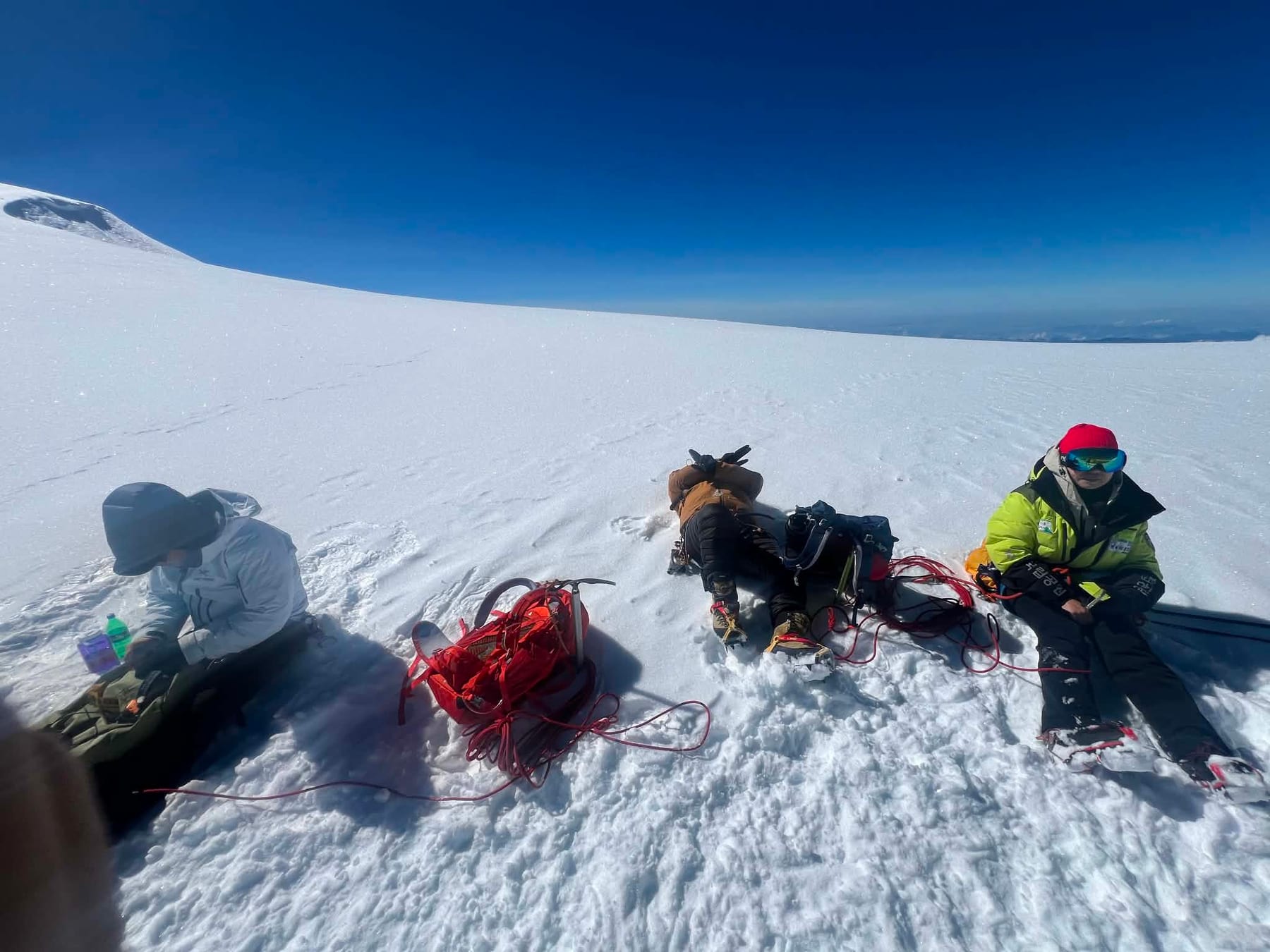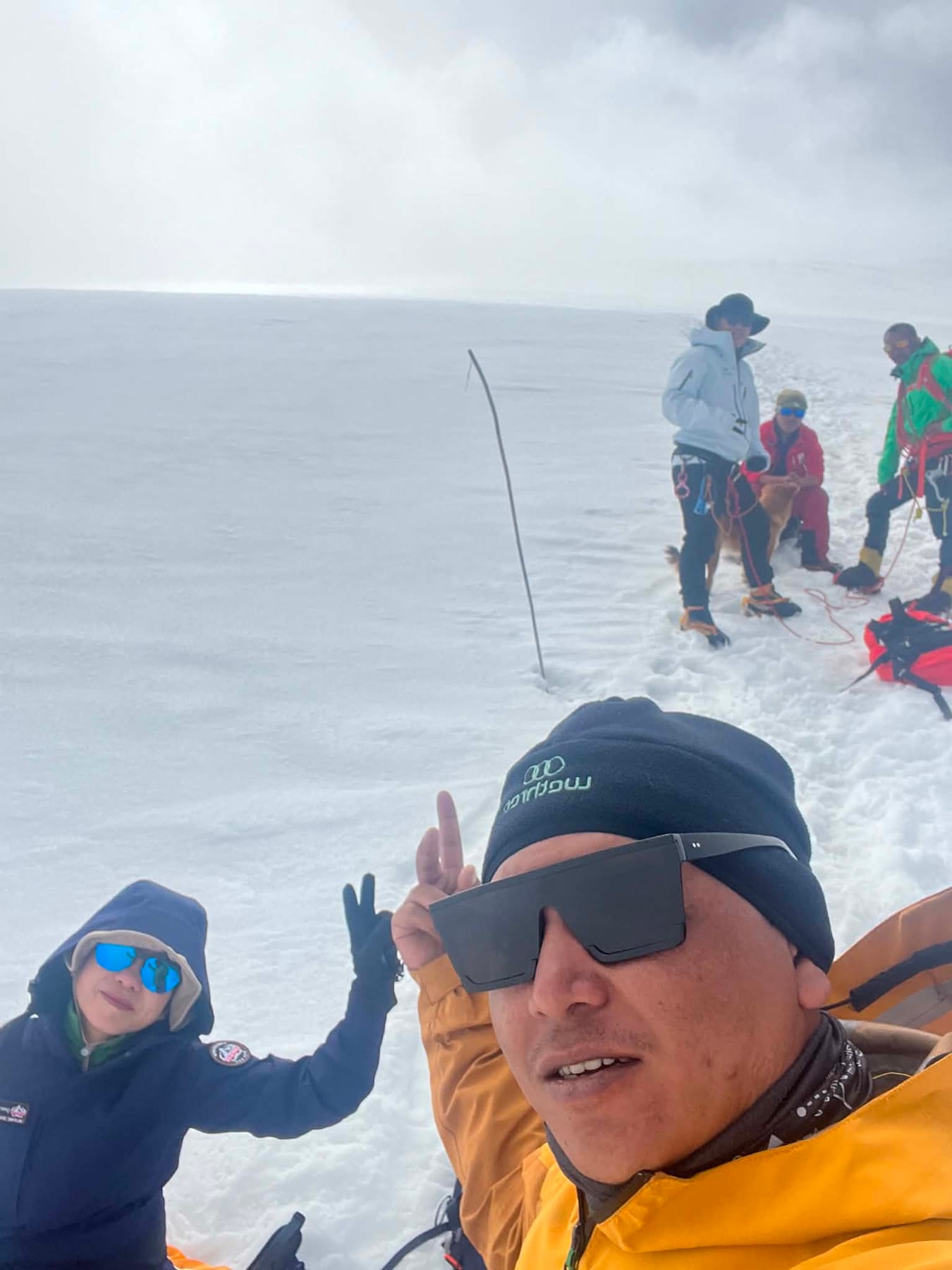
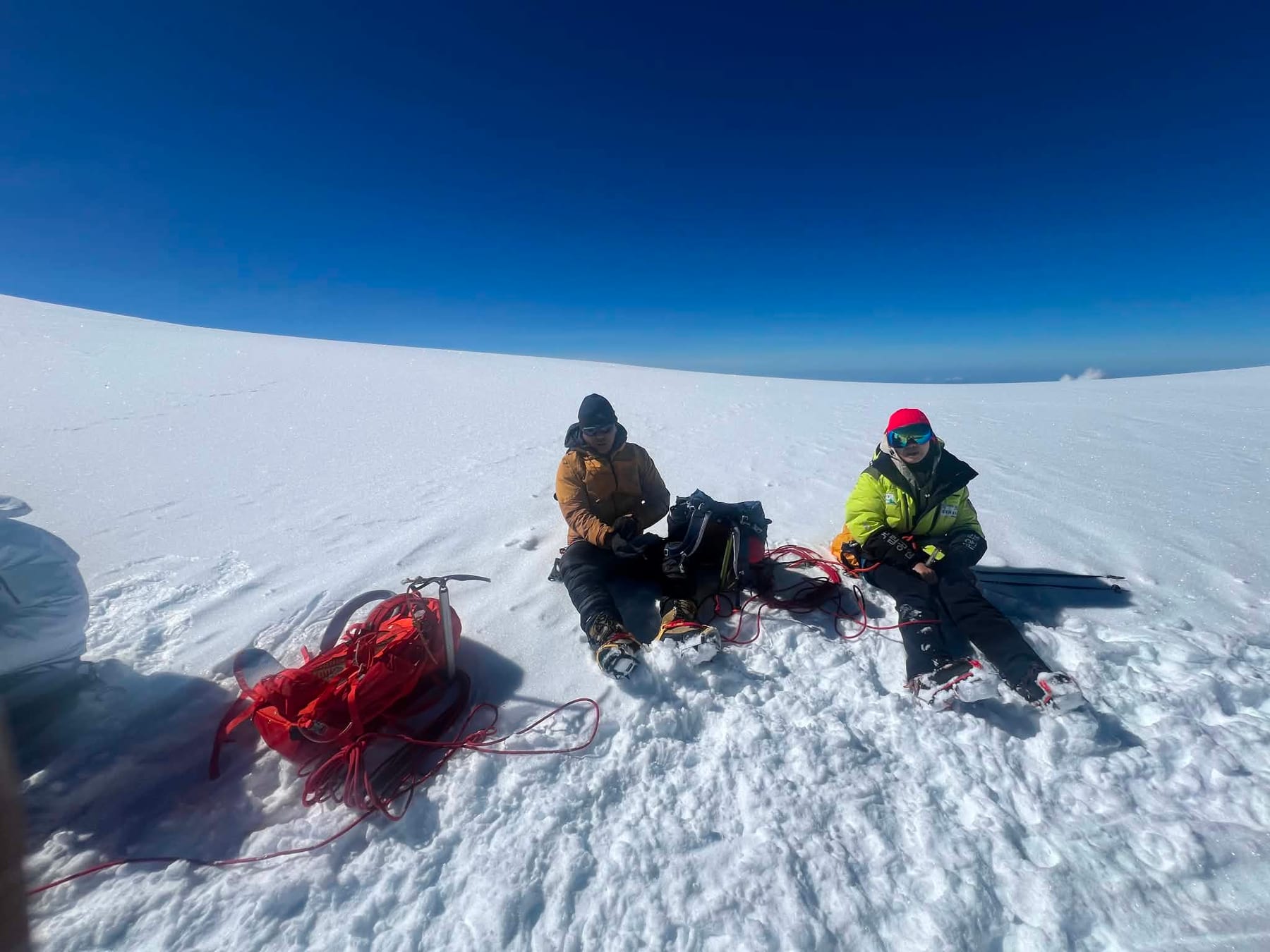
The highest trekking peak in Nepal, reached through the Hinku Valley rather than the crowds of the Everest trail.
At 6,476 metres, Mera is the highest of Nepal's trekking peaks, and it is climbed from one of the quietest valleys in the Khumbu.
The route turns away from the busy Everest Base Camp trail almost immediately after Lukla and heads south into the Hinku Valley, a remote and far less developed corner of the region. You walk through rhododendron and bamboo forest, over several passes, past small Sherpa settlements, and gradually up the valley to Khare, where the climb is prepared.
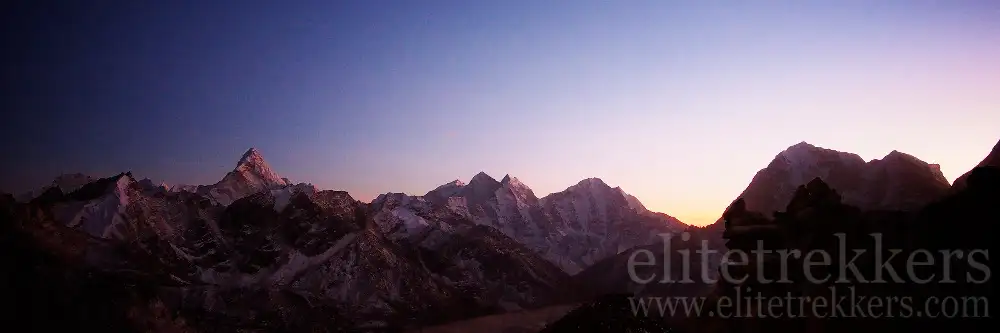
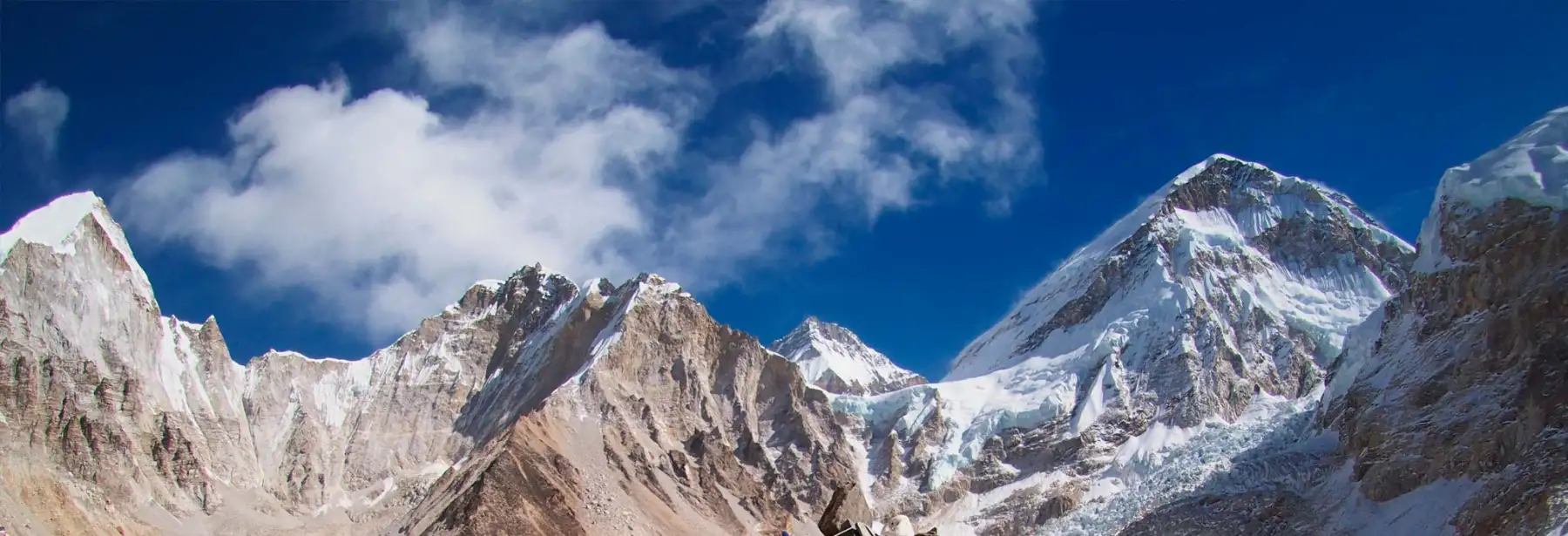
From Khare the route continues to Mera Base Camp and High Camp before the summit attempt. Mera is a snow climb rather than a technical rock and ice route, and from the top, weather permitting, you look out over five of the world's highest mountains: Everest, Lhotse, Makalu, Cho Oyu and Kanchenjunga.
Our local staff are paid a decent living wage, get provided with all the right gear and are always well looked after. We pride ourselves on this.
The itinerary allows a full acclimatisation day at Thangnak, a training day at Khare, and a contingency day near the end for weather and flight delays. No previous mountaineering experience is needed, but previous high-altitude trekking experience is strongly recommended.
Highlights
- The summit of Mera Peak at 6,476 m, the highest trekking peak in Nepal
- The mountain flight in and out of Lukla
- The beautiful and quiet Hinku Valley
- Remote Sherpa villages and mountain communities
- Rhododendron, bamboo and alpine forest
- Acclimatisation at Thangnak and Khare
- Basic mountaineering and glacier training with your climbing guide
- The Mera La and the high glacier terrain above it
- Sunrise from the summit
- Views of Everest, Lhotse, Makalu, Cho Oyu and Kanchenjunga
- The Zatrwala Pass on the way back to Lukla
- A contingency day held in reserve for weather
Itinerary
Arrive in Kathmandu 1400
Arrival at Tribhuvan International Airport and transfer to your hotel. Meet your trekking and climbing team and prepare for the adventure ahead.
Fly to Lukla, trek to Paiya 2730
Morning flight from Kathmandu to Lukla. After meeting the local trekking team, begin walking towards Paiya, leaving the main Everest trail behind almost straight away.
Paiya to Panggom 2846
Trek through beautiful forest and mountain trails towards Panggom.
Panggom to Ningsow
Continue through the remote Hinku region, crossing several valleys with spectacular mountain scenery along the way.
Ningsow to Chhatra Khola
Walk on through rhododendron and bamboo forest towards Chhatra Khola.
Chhatra Khola to Kothe 3600
Follow the Hinku River up through the valley to Kothe.
Kothe to Thangnak 4350
Climb gradually higher through the Hinku Valley to Thangnak.
Acclimatisation day at Thangnak 4350
A rest and acclimatisation day. A short hike to a higher elevation can be arranged before returning to Thangnak for the night.
Thangnak to Khare 4900
Continue up to Khare, the main preparation point for the Mera Peak climb.
Acclimatisation and climbing training at Khare 4900
The day is spent acclimatising and preparing for the climb. Your climbing guide will give practical instruction on the appropriate use of climbing equipment, including crampons, harness, ice axe and rope technique.
Khare to Mera Base Camp or High Camp
The high-altitude climbing section begins. Depending on weather, snow conditions and the climbing team's plan, you will stay at Mera Base Camp or continue on towards High Camp.
Mera Peak summit day 6476
The summit attempt starts very early in the morning. After reaching the top, take in the Himalayan panorama before descending to a lower camp.
This is the most demanding day of the trip and asks for good physical preparation, proper acclimatisation and the right climbing equipment.
Khare down to Kothe 3600
With the summit behind you, descend through the Hinku Valley to Kothe.
Kothe to Thuli Kharka 4300
Continue through the mountain landscape towards Thuli Kharka.
Zatrwala Pass, down to Lukla 2840
Cross the Zatrwala Pass, the last high point of the trip, and descend to Lukla.
Fly back to Kathmandu 1400
Morning flight from Lukla to Kathmandu, subject to weather and flight conditions.
Contingency day
A spare day held in the itinerary in case of bad weather, flight delays or unexpected conditions during the climbing period.
Departure from Nepal
Transfer to Tribhuvan International Airport for your onward international flight.
How hard is it?
Mera Peak is technically less demanding than many Himalayan peaks, and that is exactly why it gets underestimated. The summit is well above 6,000 metres, and you are dealing with altitude, cold, snow, glacier terrain and a very long summit day.
Good physical preparation and proper acclimatisation are essential, and previous high-altitude trekking experience is highly recommended.
Best time to climb
The best seasons are spring, March to May, and autumn, September to November. These months normally offer better conditions and clearer mountain views, although Himalayan weather can change quickly at any time.
Our support
Our experienced local guides know this mountain, its weather, the local culture and the state of the trails. We keep a flexible approach throughout the trek and make decisions according to the actual conditions on the mountain rather than the schedule on paper.
For the summit section we provide the climbing support and the preparation that let you approach the climb with confidence.
What it costs
US$3,000 per person. Mera Peak climbing requires permits, equipment, experienced climbing support and compliance with current Nepal government and local regulations. Permit requirements and fees change, so we confirm what is current before every departure.
What's included
- Airport pick up and drop off in Kathmandu
- Hotel in Kathmandu
- Return Kathmandu to Lukla flights
- All required trekking and climbing permits
- Climbing gear
- Guide and porter
- Climbing guide
- Insurance for your guide and porter
- Three meals a day, hot drinks and accommodation throughout the trek and the climb
What's not included
- International flights and Nepal visa fees
- Trekker's travel insurance, which must cover climbing at altitude
- Cold drinks and alcohol
- Bottled water
- Hot showers
- Chocolate and snacks
- Tips for your guides and porters