Four ways into the Khumbu, from eleven days to nineteen, all of them starting with the same short flight to Lukla.
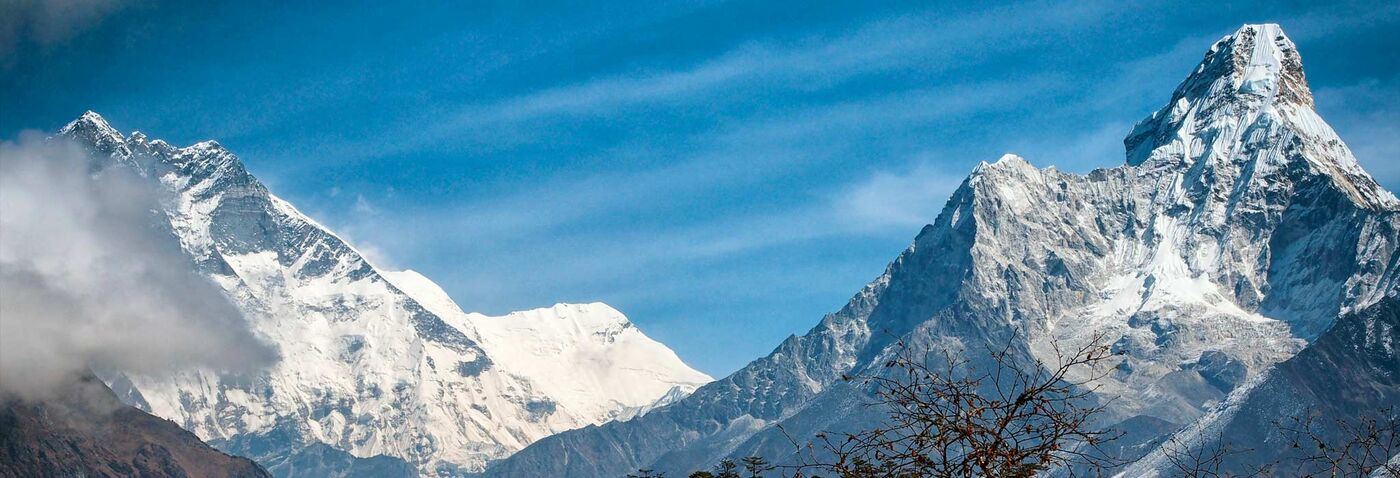
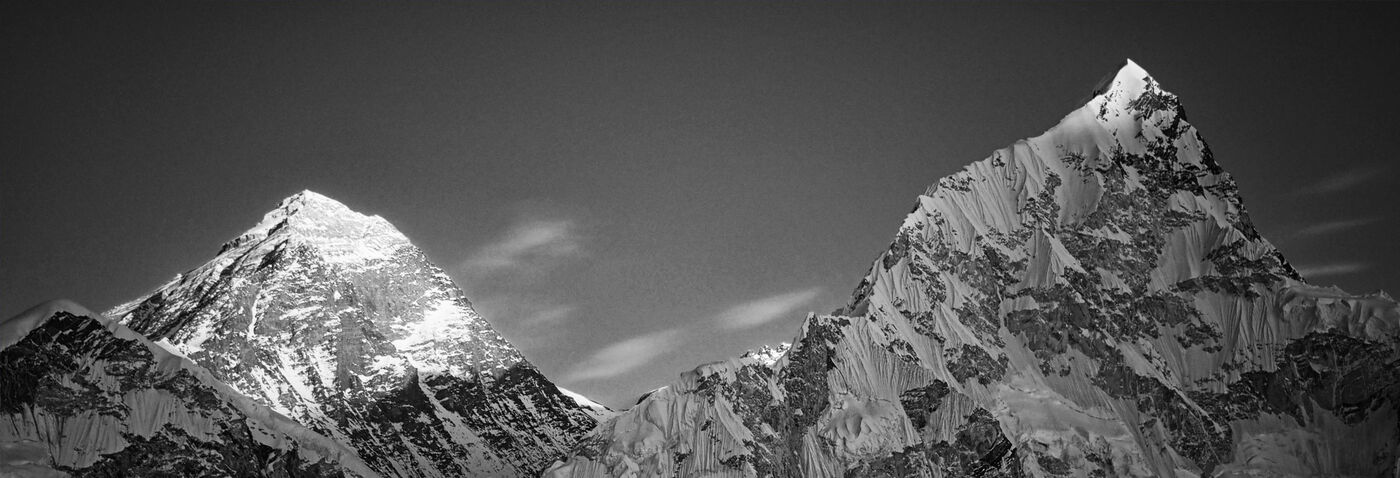
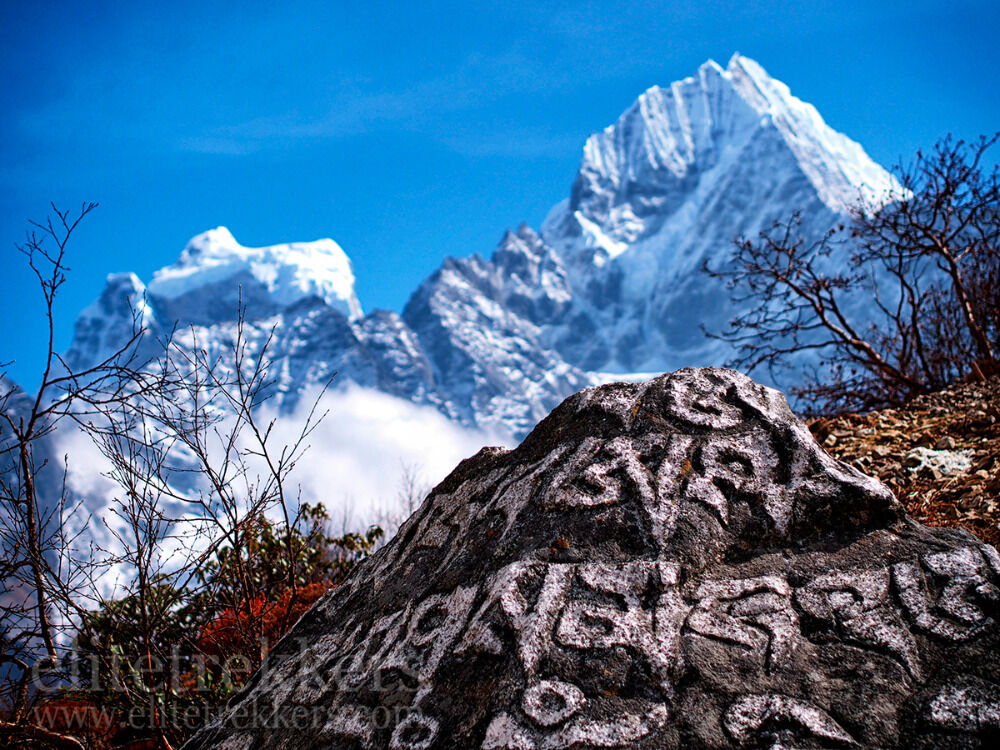
The Everest region, called the Khumbu by the Sherpa people who live in it, is the most walked corner of the Nepal Himalaya and still the one that stops people mid-sentence. You are among the highest mountains on earth within three days of leaving Kathmandu: Everest, Lhotse, Nuptse, Pumori and the one everybody photographs most, Ama Dablam.
It is also high, cold and busy in season, and the flight in is weather-dependent in a way that catches people out. None of that is a reason to go somewhere else. It is a reason to plan the trek properly and to walk it slowly.
The four Everest treks we run
| Trek | Days | Highest point | Difficulty |
|---|---|---|---|
| Ama Dablam Base Camp | 11 | 4,500m | Moderate |
| Everest Base Camp | 15 | 5,545m | Challenging |
| Everest Base Camp and Gokyo | 17 | 5,545m | Challenging |
| Three High Passes and Peaks | 19 | 5,559m | Very tough |
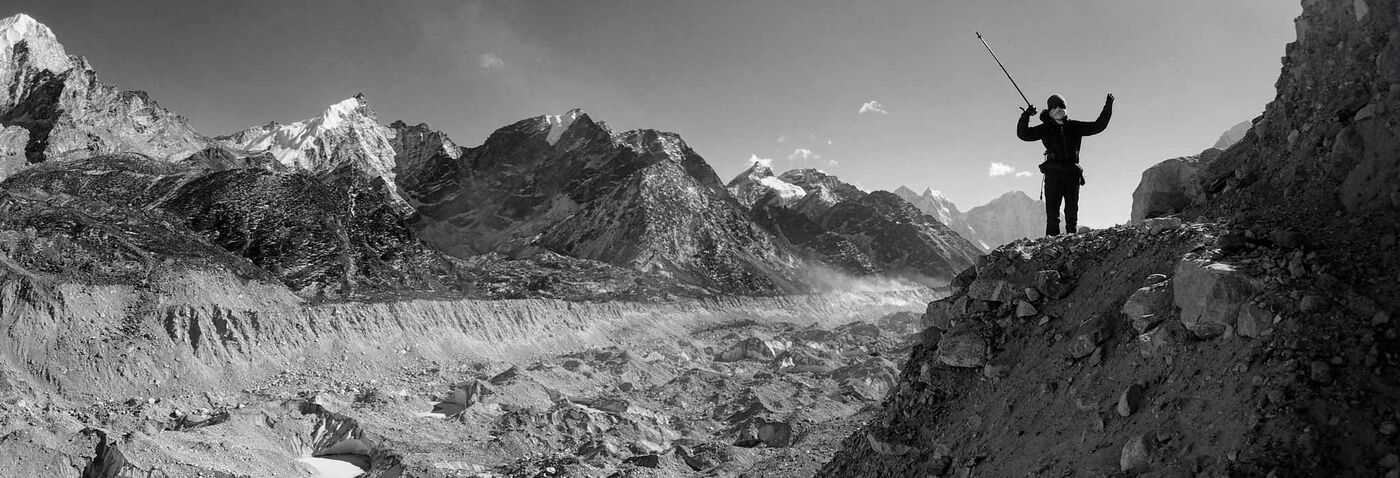
Everest Base Camp is the one people mean when they say they want to trek in Nepal. Fifteen days, Namche Bazaar, the monastery at Tengboche, sunrise on Kala Patthar at 5,545m and the Khumbu Glacier under your boots. It is not technical. It is long, cold and high, and the hard part is your body rather than the trail.
Ama Dablam Base Camp is the one to look at if you have eleven days rather than fifteen, or if the idea of the main trail in October puts you off. It tops out at 4,500m, which is a materially easier proposition at altitude, and it puts you underneath the most beautiful mountain in the range while the crowds carry on up the valley.
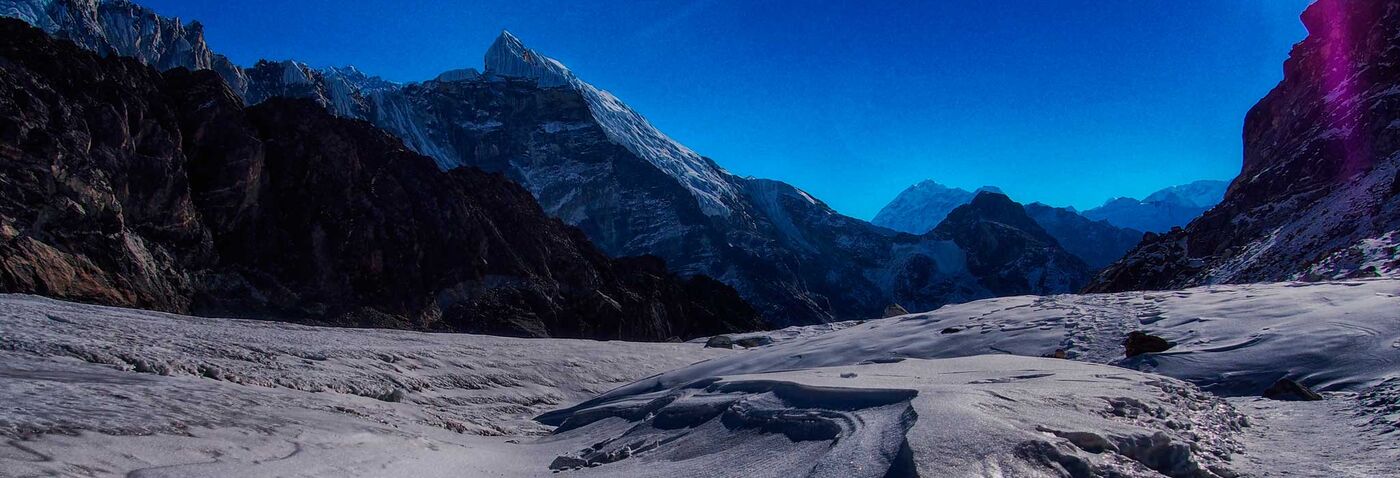
Everest Base Camp and Gokyo adds the Gokyo lakes, the climb up Gokyo Ri and the crossing of the Cho La to the standard trek. Two extra days, one serious pass, and in our opinion the better view of Everest of the two.
Three High Passes and Peaks is the full circuit of the Khumbu: Renjo La, Cho La and Kongma La, all over 5,000m, plus Gokyo Ri and Kala Patthar. Nineteen days, and the only one of the four we would talk you out of if you have not been at altitude before.
If you want to go higher than walking takes you, the climbing routes out of this same valley are in our trekking peaks section. Island Peak and Lobuche East both begin as the trek above and end with crampons on.
Permits here work differently, and everyone gets this wrong
The Khumbu was the first region to drop the TIMS card, and it is now gone nationwide. Here it was replaced by the Khumbu Pasang Lhamu Rural Municipality permit, which you buy at Lukla or at the Monjo checkpoint rather than in Kathmandu, and which sits alongside the Sagarmatha National Park permit. Two permits, no TIMS, and a card bought in Thamel for an Everest trek is money you did not need to spend. The current figures are on our permits and park passes page.
What has not changed is the guide requirement. Since April 2023 a foreign trekker in a national park needs a licensed guide or porter-guide, and Sagarmatha National Park is a national park. The forum threads arguing about TIMS are answering a different question, and an out of date one: see do you need a guide to trek in Nepal.
Altitude is the thing that decides this trek
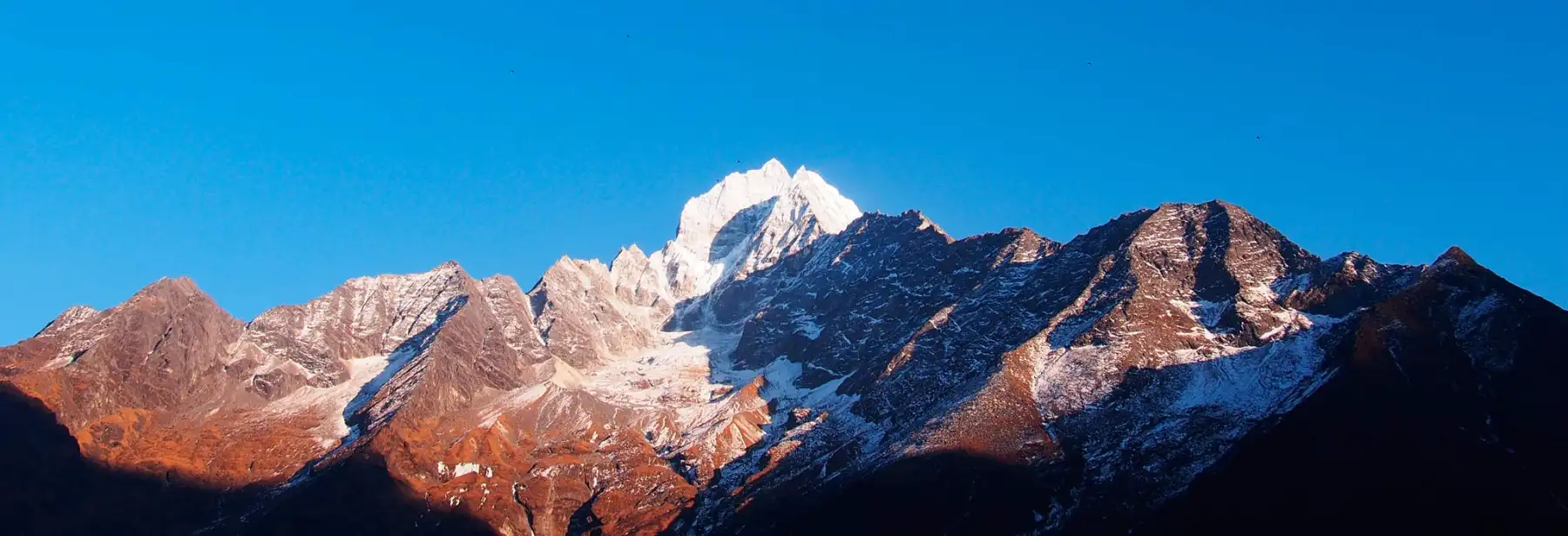
Three of the four routes above sleep higher than 5,000m and all of them start with a flight that drops you at 2,860m. Nobody is fit enough to skip acclimatisation, and the itineraries are built slow on purpose. Read altitude sickness before you book anything here, particularly the part about ascent rates and about telling your guide early.
On cold: the Khumbu in November is a different climate from the Annapurna foothills in November. Our kit list has the sleeping bag ratings, and when to trek covers what each season actually feels like up here.
What a guide costs in the Khumbu
Two published prices, both in the panel below. If you would rather hire the team only and organise the rest yourself, that is the same as anywhere else in Nepal: $28 a day for a guide, plus 13% government tax, with their own food and lodging already in it. Fifteen days to Everest Base Camp works out at $475. The full arithmetic for every trek on this page is on what a guide or porter costs.
Common questions about trekking in the Everest region
Which Everest trek should I pick if it is my first time at altitude?
Ama Dablam Base Camp at 4,500m, or Everest Base Camp itself if you have the fifteen days and are willing to walk slowly. Leave the Three High Passes for a second visit. Altitude experience is worth more than fitness here, and neither can be rushed.
Do I need a TIMS card for Everest Base Camp?
No, and no trek in Nepal does any more. The Khumbu replaced TIMS with its own municipality permit, bought at Lukla or Monjo. You need that and the Sagarmatha National Park permit. You still need a licensed guide, which is a separate rule and applies here as everywhere else.
How risky is the Lukla flight for my schedule?
Weather cancels flights in both directions and it is the single most common cause of a changed plan in this region. Build a spare day into the end of your trip rather than booking an international flight for the evening you are due back in Kathmandu. Your guide will know when to move rather than wait.
Is Everest Base Camp too crowded to be worth it?
In the second half of October, the main trail is busy and the teahouses in the popular villages fill by mid afternoon. It is still worth it. If crowds are the thing you mind most, walk in the first half of December or take the Gokyo side of the circuit, and let your guide pick the teahouses.