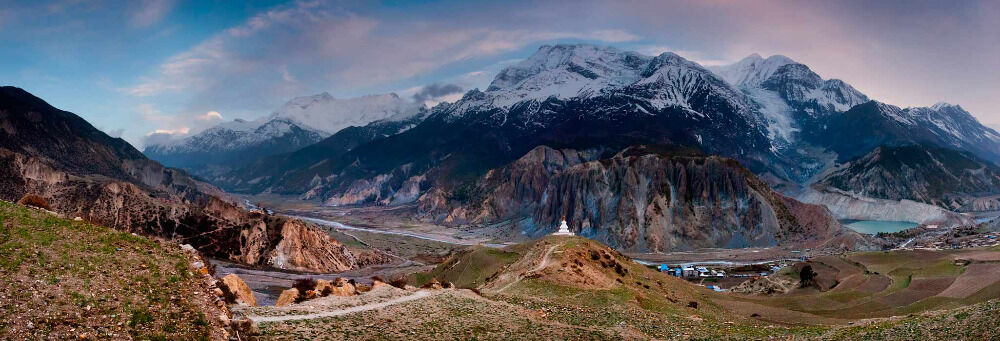
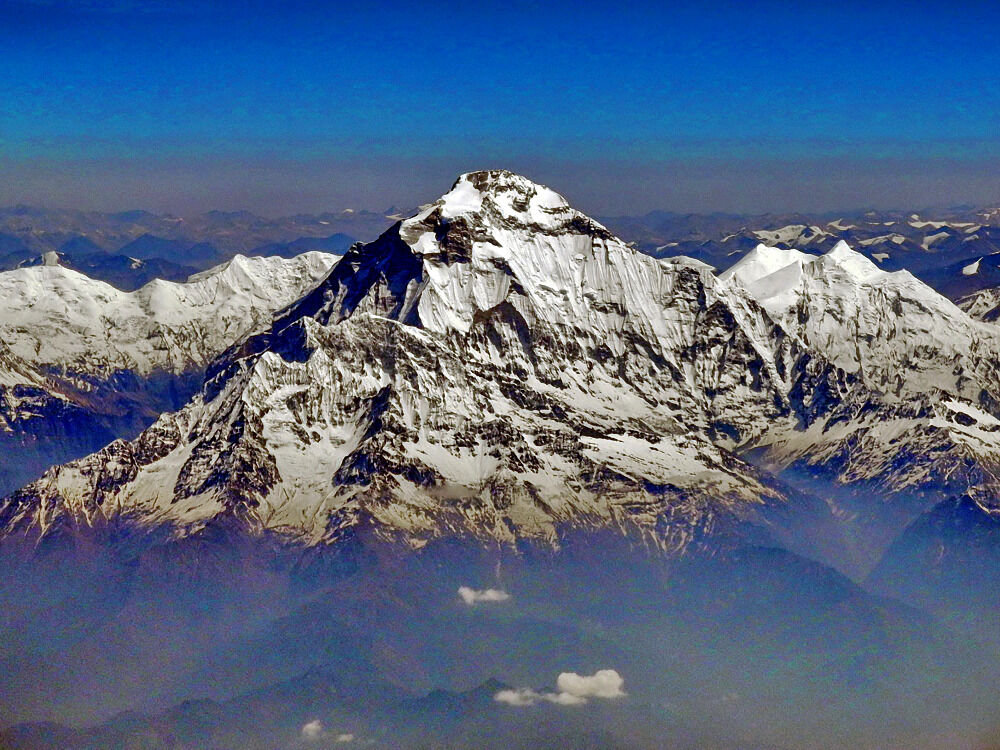
A week to a ridge at 3,660m looking straight down the Kali Gandaki at the south wall of Dhaulagiri, on a trail almost nobody else is on.
Khopra Ridge runs parallel to the Poon Hill trail, one valley west, and gets a small fraction of the traffic. It is the trek to take if the Annapurna region appeals but the queue on the Ghorepani steps at five in the morning does not.
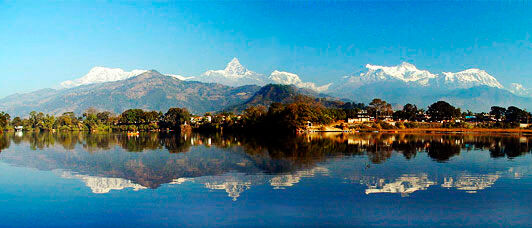
The view is the reason to come. From the ridge you are looking across the Kali Gandaki gorge, the deepest in the world by most ways of measuring it, at the south face of Dhaulagiri: an 8,000m mountain with nothing in front of it, three and a half kilometres of vertical relief across the valley. Annapurna South, Nilgiri and Fang stand behind you. Poon Hill gives you a panorama. This gives you one enormous thing.
The lodge at Khopra is run by the villages of the Annapurna Community Lodge network rather than by a private owner, and the money stays in the valley. That matters to us and it is part of why we send people here rather than somewhere better known.
Our local staff are paid a decent living wage, get provided with all the right gear and are always well looked after. We pride ourselves on this.
Khayer Lake, and whether to do it
Khayer Lake, which you will also see written as Kaire or Khayar, sits at about 4,600m in a bowl under Annapurna South, and it is sacred, with a Mahadev shrine at the water. Reaching it from Khopra is a 940m climb and a 940m descent in one day, seven to nine hours, at an altitude where neither half is quick.
It is a genuinely hard day and it is optional for good reasons. It is the only part of this trek that goes above 4,000m, so it is the only part where altitude is a real consideration, and it comes on the fifth day of a seven day trip, which is not long to have been acclimatising. Snow closes it for much of the winter. Your guide will make the call on the morning based on the weather, the trail and how the group is walking, and there is no shame at all in sitting on the ridge with a flask instead. The trek is worth doing without it.
Itinerary
Kathmandu to Ghandruk 1940
A long travelling day: six to eight hours west to Pokhara on the Prithvi Highway, then two and a half to three hours by road up to Ghandruk. Ghandruk is the big Gurung village of the Annapurna foothills, stone houses and slate roofs stacked up the hillside, and there is enough of the afternoon left to walk around it and get your first look at Annapurna South and Machhapuchhre.Ghandruk to Bayli Kharka 3420
Six or seven hours and the biggest single day of climbing on the trek. Rhododendron and oak forest as far as Tadapani, where the Poon Hill traffic peels away, and then a quieter trail north into forest that thins as you gain height. Bayli Kharka is a herders' clearing with a lodge in it. You will feel the 1,500m of ascent.Bayli Kharka to Chistibung 3050
Five or six hours, and a day that loses height before it regains it, which is better for you than it sounds. Forest, then a long open climb to the pastures at Chistibung, where the valley opens west and Dhaulagiri starts to show itself. Danphe, the Nepali national bird, are common along here and reliably noisy.Chistibung to Khopra Ridge 3660
Four or five hours, and a short day on purpose. The trail leaves the last of the trees and climbs onto the open ridge, and then you are at the lodge, which is sat on the crest with the Dhaulagiri wall filling the window. Afternoon free, partly for the view and partly to be rested if you are going to the lake.Khayer Lake and back, or a day on the ridge 4600
Seven to nine hours out and back if you go: a long steady climb up the shoulder to the lake at about 4,600m, under the south side of Annapurna South, and the same distance back down. If the weather or the group says no, the ridge itself is a fine place to spend a day, and there are shorter walks along it. Second night at Khopra either way.Down to Swanta and Ulleri, drive to Pokhara 800
Six or seven hours of descent, steeply at first and then through Swanta, a small village with a community cheese operation, and down to the stone staircase at Ulleri. Vehicle from there to Pokhara, two or three hours, and an evening on Lakeside.Return to Kathmandu 1400
The drive back east, six to eight hours. The trek ends on arrival in Kathmandu.
What's included
- Hotel in Kathmandu on the night before the trek
- Welcome dinner, briefing and cultural show the night before the trek
- Transport between Kathmandu, Pokhara and the trailheads
- Hotel in Kathmandu on the night after the trek
- Airport meet & greet on arrival into Kathmandu
- Hotel in Pokhara after the walking
- Teahouse and community lodge accommodation during the trek
- Breakfast every morning (except arrival day of course)
- Hot drink of your choice every morning
- High quality sleeping bags provided for trek
- English speaking, skilled & experienced Nepali group leader
- Ample additional English speaking guides for the group
- Well paid local porters to carry your gear
- Proper, quality mountain gear to keep our porters safe and warm
- Insurance of all staff, including porters
- Annapurna Conservation Area permit and trekking paperwork
- Full pre-departure briefing and trip information
What's not included
- International flights / transport
- Nepal visa fees (payable on arrival)
- Trekker's travel insurance
- Evening meals, drinks and luxuries on the trek
- Personal needs (e.g. laundry, postcards)
- Tips for your Guides & Porters
Common questions about the Khopra Ridge trek
How high is Khopra Ridge?
The ridge and the lodge are at about 3,660m. That is the highest you sleep. Khayer Lake, if you go, is around 4,600m and you come back down the same day.
Is it harder than Ghorepani Poon Hill?
Yes. Similar length, but Khopra sleeps 800m higher, has a much bigger second day and has far fewer lodges to bail out at. The optional lake day is harder again. Poon Hill is the easier trek and Khopra is the better view, which is a fair trade in both directions.
Can I skip Khayer Lake?
Yes, and plenty of people do. It is written into the itinerary as optional rather than as a promise, because weather, snow and how the group is going all get a say. The trek stands up perfectly well without it.
Can Khopra be combined with Poon Hill?
Easily, and it is a good way to spend ten or eleven days. The two trails share ground around Ghandruk and Tadapani, so a route that takes in Poon Hill for the sunrise and then heads out to Khopra for the quiet is straightforward to build. Ask us and we will lay it out.
What is the accommodation actually like?
Ordinary teahouses low down, and a community run lodge at Khopra. Simple rooms, shared bathrooms, dal bhat and a stove in the dining room. At 3,660m in an exposed spot it is cold at night, which is what the sleeping bags are for.
What permit do I need?
The Annapurna Conservation Area permit, NPR 3,000. No TIMS card, and no restricted area permit: Khopra sits inside the ordinary conservation area. We arrange it. See permits and park passes.