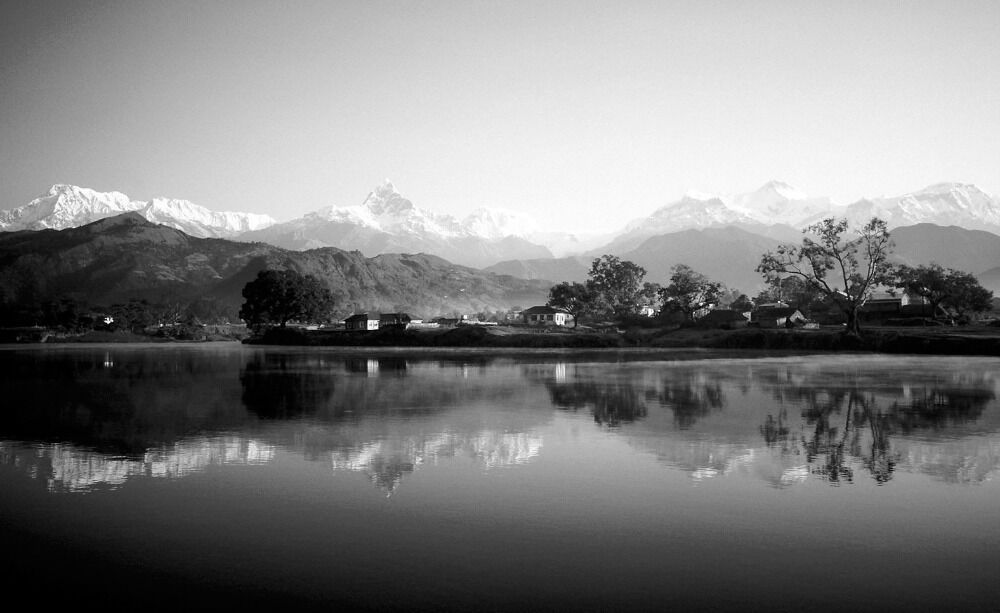
A week from Pokhara onto a narrow ridge at 4,500m, with Machhapuchhre close enough to stop looking like a view.
Mardi Himal is the newest trail in the Annapurna region and still the quietest of the well known ones. It was a camping route until about a decade ago. The teahouses strung up the ridge are the reason it can now be walked in a week with nothing on your back but a day sack, and they are also why it will not stay this quiet.
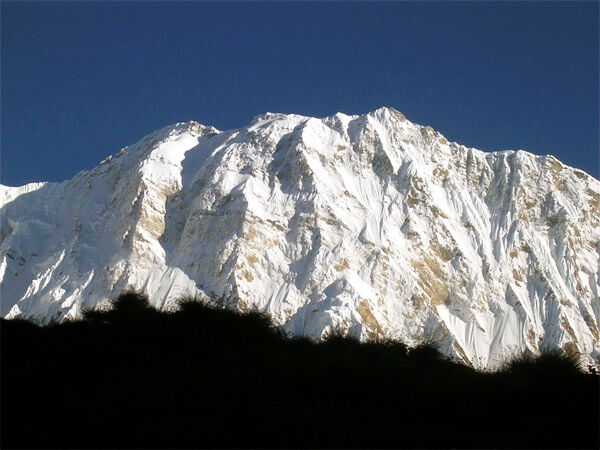
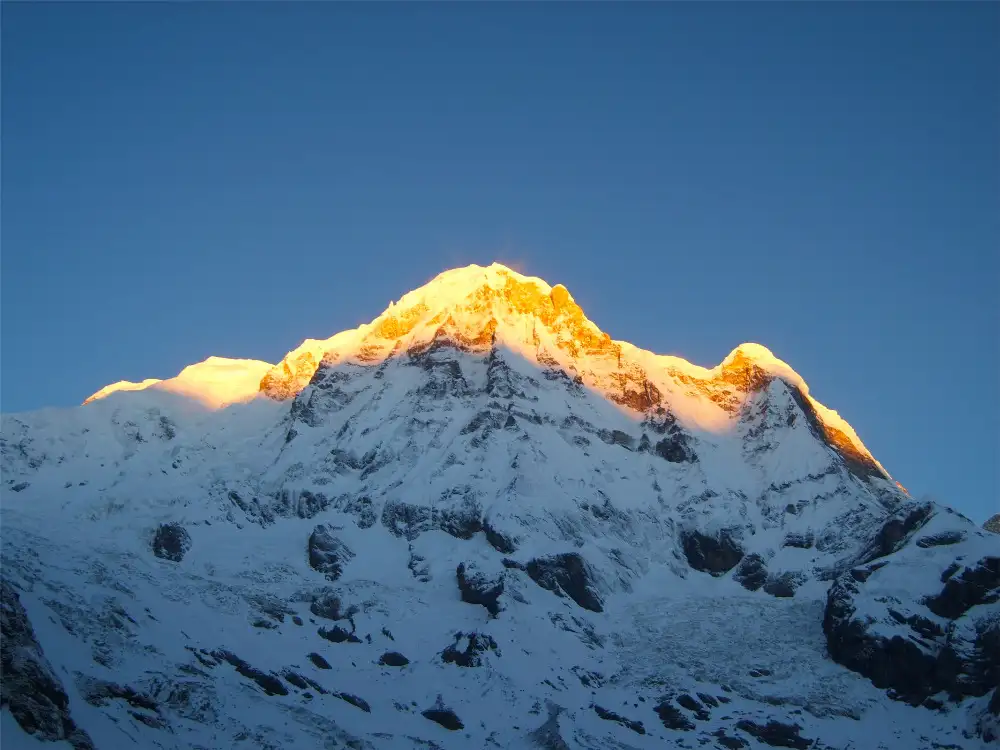
What makes it worth the days is the shape of it. Most Annapurna treks walk up a valley with the mountains waiting at the end. This one climbs onto a ridge on the second afternoon and stays on the ridge, so from Low Camp upwards the ground falls away on both sides and Machhapuchhre sits directly in front of you, close enough that it stops reading as scenery and starts reading as a wall. Annapurna South and Hiunchuli come round to the left as you gain height.
Our local staff are paid a decent living wage, get provided with all the right gear and are always well looked after. We pride ourselves on this.
The thing to know before you book it
Seven days is quick for 4,500m. You sleep at 2,100m on the second night and stand at 4,500m on the fifth day, which is a faster profile than we would choose if the ridge gave us anywhere else to sleep. It is walked by thousands of people every season and it is not a dangerous trek, but it is the reason we call this one moderate rather than easy, and the reason the people who struggle on it nearly all struggle on the same morning.
Two things are in your favour. High Camp at 3,580m is where you sleep twice, so the last 900m is done as a day out and handed back the same afternoon, which is exactly the shape acclimatisation likes. And the descent to Siding gives up 2,000m in a morning, so if altitude does become the problem, the fix is a few hours away rather than a few days. Read altitude sickness before you come, not on the ridge.
If a week is what you have and the altitude worries you, Ghorepani Poon Hill is the same length, sleeps below 2,900m throughout and ends on a famous sunrise. It is the trek we suggest to people who are not sure yet.
Itinerary
Drive to Pokhara 822
The Prithvi Highway west out of Kathmandu, six to eight hours depending on what the road is doing, following the river through terraced hills and roadside towns. Pokhara is warm, low and sits on a lake, and the evening is yours on Lakeside. If you would rather start and finish in Pokhara and skip both drives, say so when you enquire and we will price it that way.Kande to Deurali 2100
An hour and a half by road to Kande, then four or five hours of walking. The trail climbs through forest to Australian Camp, which is where the Annapurnas first line up along the skyline properly, then on through Pothana and into the rhododendrons to Deurali. A gentle first day by the standards of this trek.Deurali to Forest Camp 2550
Five or six hours inside rhododendron and oak, moss on everything, Machhapuchhre appearing through gaps in the canopy and then disappearing again. It is a quiet day and a beautiful one, and it is the last of the walking that feels like a woodland walk.Forest Camp to High Camp 3580
The big climbing day, five to seven hours. The trees shorten through Low Camp and then stop, and from there you are on the open ridge with Machhapuchhre ahead, Annapurna South and Hiunchuli to the left, and a long way down on either side. Take it slowly. This is where the altitude starts to be a thing you notice.Mardi Himal Base Camp and back 4500
Seven to eight hours out and back, starting in the dark. The ridge narrows and steepens above High Camp, the ground turns to rock and grass, and the last hour is a slog with very little air in it. Base Camp sits under the south face of Mardi Himal with the whole Annapurna wall opposite. Then back down to High Camp for a second night at 3,580m, which is the best thing this itinerary does for you.Down to Siding, drive to Pokhara 800
Four to six hours of descent off the east side of the ridge, out of the alpine and back into forest and farmland, to the Gurung village of Siding. It is a working village rather than a trekking one and the change of register is worth the knees. Vehicle from Siding to Pokhara, two or three hours, and a last evening by the lake.Return to Kathmandu 1400
The long drive back, six to eight hours through the hills. The trek ends on arrival in Kathmandu.
What's included
- Hotel in Kathmandu on the night before the trek
- Welcome dinner, briefing and cultural show the night before the trek
- Transport between Kathmandu, Pokhara and the trailhead
- Hotel in Kathmandu on the night after the trek
- Airport meet & greet on arrival into Kathmandu
- Hotel in Pokhara either side of the walking
- Comfortable teahouse accommodation during the trek
- Breakfast every morning (except arrival day of course)
- Hot drink of your choice every morning
- High quality sleeping bags provided for trek
- English speaking, skilled & experienced Nepali group leader
- Ample additional English speaking guides for the group
- Well paid local porters to carry your gear
- Proper, quality mountain gear to keep our porters safe and warm
- Insurance of all staff, including porters
- Annapurna Conservation Area permit and trekking paperwork
- Full pre-departure briefing and trip information
What's not included
- International flights / transport
- Nepal visa fees (payable on arrival)
- Trekker's travel insurance
- Evening meals, drinks and luxuries on the trek
- Personal needs (e.g. laundry, postcards)
- Tips for your Guides & Porters
Common questions about the Mardi Himal trek
How high is Mardi Himal Base Camp?
About 4,500m. The upper viewpoint on the ridge below it is around 4,200m, and some itineraries stop there and still call it Base Camp, so compare the number rather than the name when you are looking at other operators.
Is Mardi Himal harder than Ghorepani Poon Hill?
Considerably, and almost entirely because of the altitude. The walking is not much longer per day, but Poon Hill tops out at 3,210m and sleeps below 2,900m, while this one puts you at 4,500m on day five. If you have never been above 3,000m, that is the difference you are choosing between.
Do I need previous trekking experience?
No, but you need to be fit enough for five to seven hours of uphill walking on consecutive days, and you need to have read up on altitude. It is a reasonable first Himalayan trek for someone who walks regularly at home. It is a poor first trek for someone who does not.
Can it be done in fewer than seven days?
The walking is five days. Our seven includes the drives to and from Kathmandu at either end. Start and finish in Pokhara and you save two days, which is worth doing if you are already flying or driving there for other reasons.
Is there snow at Base Camp?
Often, from December through to March, and the last section to Base Camp can be closed by it. Autumn and spring are the seasons that reliably get you the whole way up. See when to trek in Nepal.
What permit do I need?
The Annapurna Conservation Area permit, NPR 3,000, and nothing else. There is no TIMS card any more. We arrange it with the trek. Full list on permits and park passes.